The Belize Barrier Reef

belize barrier reef

Whether you’re an evolutionist or a creationist, there’s literally no argument when it comes to the world’s wonders, and in the Western Hemisphere, nothing compares to the miracle known as the Belize Barrier Reef. This colorful formation supports a gorgeous array of plant and animal species, all of which coexist peacefully at one of the world’s most diverse ecosystems.

What will you find if you visit the Belize Barrier Reef? Hundreds of invertebrates. Around 500 species of exotic fish. And candy-colored coral that fits into either the soft species category (about 36 types in all), or 70 varieties of hard coral species that have been thriving in this corner of the Caribbean for thousands of years.

Will you be able to visit every nook and cranny of the reef? Not unless you stick around for years and are willing to do a large amount of investigating beneath the ocean: Only 10-percent of all reef life forms have been identified and classified since Charles Darwin created the reef’s first taxonomic report and that was back in 1842.

To visit the Belize Barrier Reef and spend as much time as possible exploring its mysteries, headquarter in Belize. The reef literally hugs the coast so visitors enjoy perpetual access. And you’ll never complain about the time it takes to get to and from the reef because it can be measured in minutes not hours.

Think about booking luxury accommodations at a resort that’s a favorite of repeat visitors to Belize: Chabil Mar (Chabilmar.com). Staff won’t just provide a luxurious pillow on which to lay your head, but excursions to the Belize Barrier Reef—and, if you desire, seven marine reserves, 450 cayes and three atolls! Okay, so you don’t have that much time. No worries. Chabil Mar staff are experts at choreographing customized itineraries.

With 90-percent of the reef still in need of exploration, there’s every reason to believe that oceanographers and marine biologists will continue to use this area as their laboratory, studying the living building blocks that make up this fascinating mass. If you recall your biology lessons, you know that reefs are made up of living animal colony polyps that deposit calcium carbonate secretions onto the surface, adding new layers of material century after century.

Keep in mind all of this wonder as you don diving gear to explore Belize’s rainforest of the sea. See if you can spot sponges, fish, mollusks and echinoderms that cling to the reef to form the next layer as future generations of material add to the reef’s surface. As you swim and examine that surface, don’t be surprised if you find that you’ve picked up companions: schools of vividly-colored fish will be as curious about you as you are about them.

To maintain this rare and fragile area, the nation of Belize has undertaken extraordinary steps to make sure future generations will come to this area of the Caribbean and find the reef awaiting them intact. These conservation measures have required commitment, money and time, but that’s what must be done when taking care of an irreplaceable treasure.

Toward that end, Belize is battling on all fronts, supporting initiatives that threaten this fragile ecosystem: prohibitions against blast fishing, dumping waste leading to ocean acidification, outlawing harmful land-use practices, discouraging overuse of reef resources and confronting climate change threats. The government has even taken a unique interest in stopping excessive algae accumulation resulting from agricultural runoff.

If you think about it, the Belize Barrier Reef is the perfect example of a natural wonder that’s both old and new, because in the scheme of things, 10,000 years is really a drop in the bucket when measured against the earth’s age! Why is this important? Because reefs like this one are young enough to be rehabilitated by taking proactive measures to slow erosion, so the reef maintains its health and integrity.

By pairing your desire to see as much of the Belize Barrier Reef as time allows with a stay at Chabil Mar, you needn’t worry that you’ll miss out on the pleasures of a proper holiday. Indulge yourself during your much-needed getaway. In addition to excursions to the reef and other destinations, avail yourself of Chabil Mar spa massages, discover gourmet dining Caribbean style and don’t forget to dig your toes into the sand.

By the way, you needn’t feel that you have to do it all! The reef isn’t going anywhere and you’ll want to return, so if the only two things desire during your visit are seeing the reef and getting caught up on your sleep, our staff is happy to keep a “Do not disturb” sign on your door as long as you wish it to remain there!
Contact Us to learn more about the Placencia Peninsula, Placencia Village, Belize Adventures and Vacation Options or to Make A Reservation at Chabil Mar Resort


10 Stunning Photos from the Belize Barrier Reef

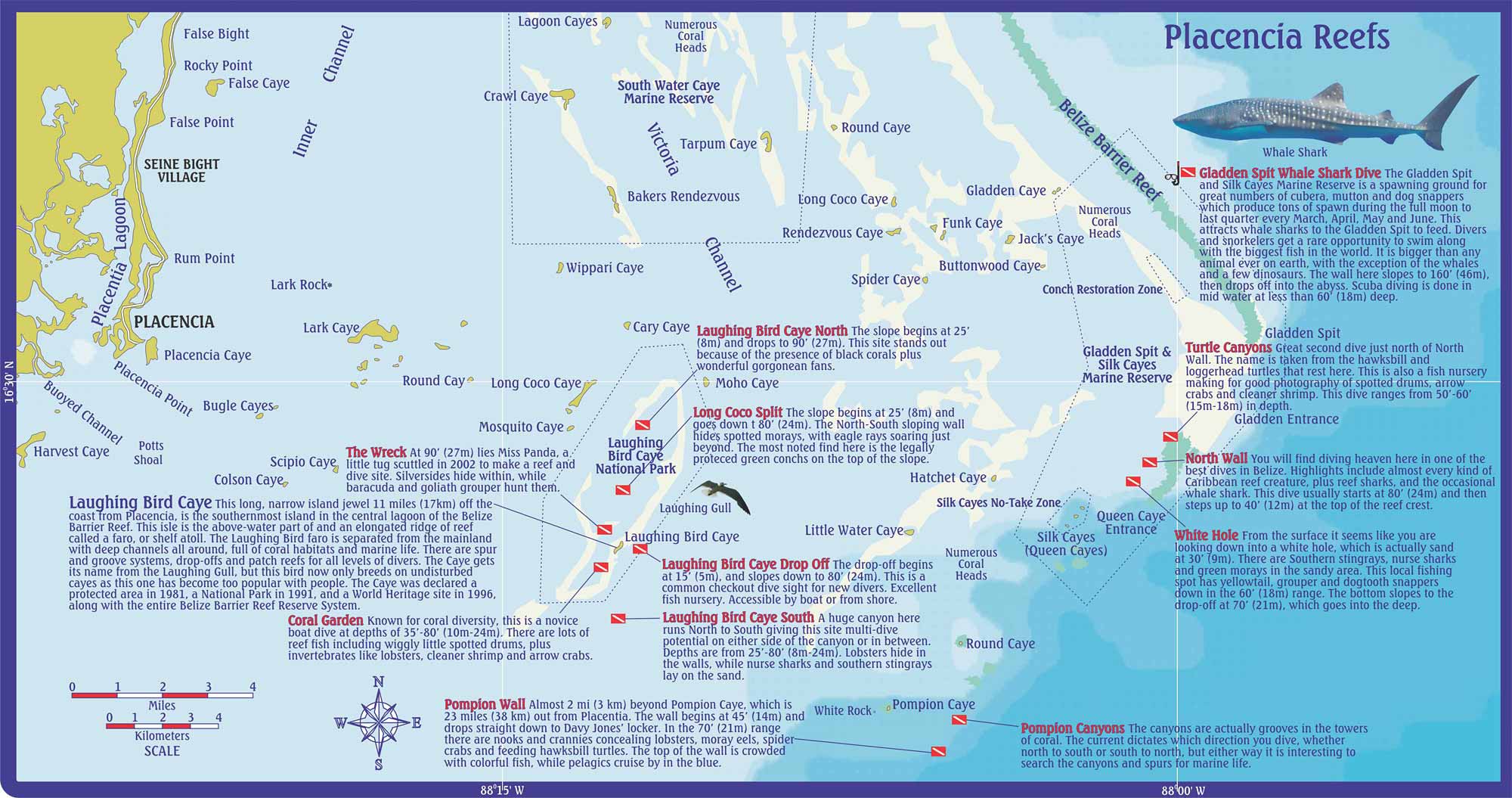
Map Dive Placencia

A few years ago, we had the pleasure of hosting James, the travel blogger behind the website www.escapingabroad.com. If you visit the about section of his site, you will find out that his favorite country in the world is Belize. We here at Chabil Mar do not blame him for that because we understand and appreciate the beautiful things that Belize offers to its 400,000 inhabitants as well as the thousands of travelers who visit the country each year.

One of those beautiful things in Belize that locals and visitors enjoy is the colorful and Great Barrier Reef.  Even Charles Darwin, the world-renowned Naturalist loved it that in 1842, he described it as the “most remarkable reef in the west indies.”The Belize Reef not only provides succulent sea food to our people but is also ideal for snorkeling and diving.

In this blog post, we share ten jaw-dropping underwater photos from the Belize Barrier reef. All photos courtesy of www.escapingabroad.com.

belize barrier reef

Colorful Reef’s

Diving near the atolls and reefs in the Southern area of Belize are some of the most colorful I’ve seen yet.

See also: Belize Sailing Vacations

pipefish_lrg

Sneaky Pipefish

Attempting to blend in but I found him anyway

belize barrier reef vacations

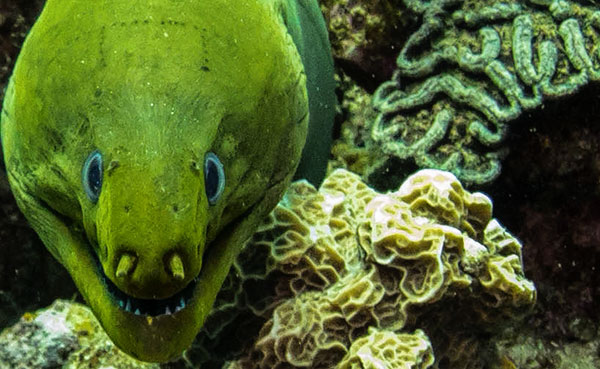
Mean Green

Moray eels look meaner than they actually are.

belize barrier reef photos

Hovering Grouper

A Nassau grouper hanging out above a large sponge.

See also: Belize Fishing Vacations

spotted-moray photos belize

Fangs

Spotted morays are smaller than their green cousins but have just as much attitude!
batfish photos belize vacations

Pinocchio

The first batfish I’ve ever seen! Sure are pretty aren’t they?

batfish photos belize barrier reef

Batfish

Had to add in a profile photo.. hard to beat how weird these guys look!

See also: Belize Island Vacations
green-moray-eel- belize barrier reef photos

Mugshot

That’s one only a mother could love!
sharpnose-puffer-fish_ belize barrier reef

Hide and Seek

This small sharpnose puffer fish tried to hide in a brightly colored sponge to no avail!

See also: Belize Scuba Diving Vacations
belize-barrier-reef

The Little Guys

It’s always fun to watch the little fish hiding close to the coral for protection.

If you are interested in discovering and exploring the great Belize reef, check out these Belize Sea Adventures. And if you have any questions on Belize, feel free to drop us an email reservations@chabilmarvillas.com

Beyond Gorgeous: 10 surreal scenes from the Beautiful Belize Barrier Reef

belize barrier reef

Photograph by Brian Skerry

The rich underwater world of Mesoamerican mangroves is mirrored at the surface on Funk Cay, near Gladden Spit in Belize. These schoolmaster snappers and assorted small fry live as hatchlings and juveniles in the protection of the mangroves, venturing out only as adults to the reef.

belize fishing in belize barrier reef

Photograph by Brian Skerry

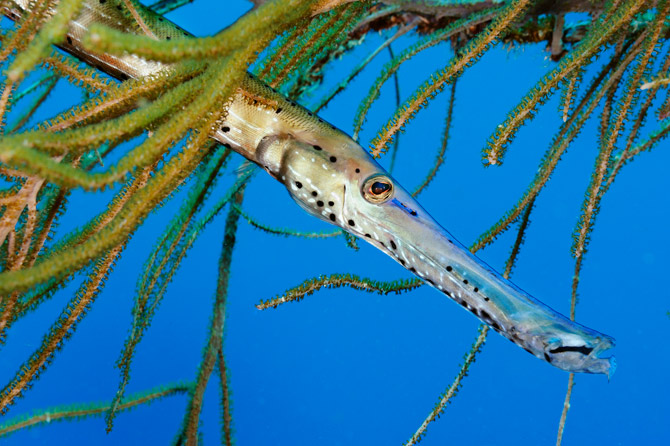
A trumpetfish hangs in the coral gardens of Lighthouse Reef atoll off Belize.

lighthouse reef atoll belize

Photograph by Brian Skerry

A banded coral shrimp, Stenopus hispidus, works at its station in a tube sponge off Long Cay on Belize’s Lighthouse Reef atoll. With its three sets of claws—one heavy-duty, the other two delicate and surgical—it removes dead tissue, parasites, and fungi from the fish that queue up at the cleaning station.

gladden spit in belize

Photograph by Brian Skerry

Three-foot-long cubera snappers, drawn to Gladden Spit in Belize by a full moon in spring, produce clouds of eggs and sperm in a thunderhead of fertility that rises to envelop divers. Snappers of several species gather here by the thousands, releasing hundreds of billions of eggs.

hol chan marine reserve belize

Photograph by Brian Skerry

A male rainbow parrotfish patrols a bed of turtle grass in Hol Chan Marine Reserve. Scarus guacamaia, the largest herbivorous fish in the Atlantic, uses all three provinces of the Mesoamerican Reef in the course of its life. As a juvenile it seeks the protection of the submerged roots at the fringe of the mangrove forest, from which it makes foraging runs to adjacent sea grass beds. As an adult it makes a home on the reef, with occasional visits to its old haunts.

fishing in belize

Photograph by Brian Skerry

Schoolmaster snappers seek the protection of a sea whip in Hol Chan Marine Reserve. In the 1980s Belizean biologist Janet Gibson campaigned successfully for the establishment of Hol Chan, insisting that the marine protected area contain slices of all three crucial Mesoamerican Reef provinces: mangrove, sea grass, and coral reef.

whale shark diving in belize

Photograph by Brian Skerry

A whale shark, biggest of fishes, hangs out with small fry off the northern tip of the Yucatán Peninsula.

belize turtles

Photograph by Brian Skerry

A loggerhead turtle grazes. Sea grass is not the typical meal for the primarily carnivorous species, which feeds on jellyfish, crabs, and conchs.

belize reef

Photograph by Brian Skerry

A view from 12,000 feet, off the coast of Belize, shows the parts of the system that make the whole. The outer reef breaks the force of the ocean swells. Next comes the white line of coral rubble along the reef crest, then the sandy back reef, and, finally, the lagoon: a maze of sand islets, mangrove cays, and sea grass beds.

belize manatees

Photograph by Brian Skerry

A manatee mother with her calf in tow grazes on turtle grass at Swallow Cay in Belize. The West Indian manatee divides its time between sea grass pastures and the waterways of the mangrove forest.

For more information about the barrier reef or Belize, feel free to chat with our Concierge at: concierge@chabilmarvillas.com or contact our Reservations Manager at: reservations@chabilmarvillas.com. Or perhaps you would like to call toll free from the US or Canada: 1-866-417-2377


Belize Barrier Reef officially de-listed from UNESCO’s danger list

In a welcome move celebrated across the country, the United Nations Educational, Scientific, and Cultural Organization (UNESCO) has officially de-listed the Belize Barrier Reef from the list of World Heritage Sites in Danger.

The Belize Barrier Reef, the largest coral reef system in the world outside of Australia, was designated a UNESCO World Heritage Site in 1996, but was placed on the World Heritage Sites in Danger list due to years of pollution and damage caused by oil drilling and exploitative fishing practices. UNESCO, at its latest meeting in Bahrain, declared that strong conservation efforts by NGOs and the government of Belize have helped restore the reef to a more sustainable condition.

The reef plays an important role in Belize’s tourism industry as well as a responsibly managed fishing industry. The reef is a top destination for tourists coming to the country to enjoy Belize vacations as its crystal clear waters and abundance of marine life are ideal for marine activities like fishing, sailing, scuba diving, and snorkeling.

“We loudly and enthusiastically celebrate the news that the Belize Barrier Reef is on the mend,” said Larry France, marketing manager of Chabil Mar Resort. “As a resort located just a few miles offshore from this UNESCO World Heritage Site, we urge all of our guests to partake in one of our Belize Barrier Reef tours to experience magnificent natural landmark for themselves.”

Chabil Mar is a luxury Belize resort offering Belize vacation packages to all of the top destinations in the country, including snorkeling and scuba diving on the reef.

CNN Says to Visit the Belize Barrier Reef Right Now

On April 24, 2017, the influential news channel CNN published a list of UNESCO World Heritage sites to visit. Published on the travel section of its popular news site CNN.com, the article written by Jen Rose Smith presented a snapshot of eight of the 55 UNESCO World Heritages currently classified as being “in danger,” including the Belize Barrier Reef.

Seven of the sites featured in the CNN article are on dry land, including the Everglades area of southern Florida and areas in Central and South America devastated by war and civil unrest. The Belize Barrier Reef is unique in that it is the only marine World Heritage site to be included in the article, a vast chain of beautiful islands, crystal clear water, coral reefs, and sandy atolls.

The Belize Barrier Reef is part of the second-largest barrier reef in the world after Australia’s Great Barrier Reef. Measuring more than 200 miles from north to south, the Belize reef includes picture-postcard-perfect islands with palm trees, white sand beaches, and tranquil lagoons that are ideal for stand-up paddling, kayaking, swimming, scuba diving, and snorkeling.

Other world-class destinations on the Belize Barrier Reef include Shark Ray Alley, a section of the enormous Hol Chan Marine Reserve that is a natural cut in the reef where vast schools of harmless nurse sharks and stingrays transit from the deep ocean to the gentler interior side of the Caribbean. The reef is also home to several protected nature areas, including Laughing Bird Caye National Park, one of the top places to snorkel and bird watch in the country.

Another famous feature of the reef is the Belize Blue Hole. Measuring some 300 meters across (985 feet), the Belize Blue Hole was created more than 10,000 years ago when rising waters at the end of the Ice Age submerged a vast series of caverns and caves. Famed French marine biologist Jacques Cousteau declared the Belize Blue Hole to be one of his top 10 favorite diving spots when he explored the area in 1971.

Chabil Mar

Chabil Mar is an award-winning resort located on the Caribbean coast of the Placencia Peninsula in southern Belize. Chabil Mar features elegantly appointed villas, a gourmet restaurant, a lush tropical garden, and a seafront pier ideal for enjoying meals under the stars.

The resort is conveniently located just a few miles from the Belize Barrier Reef and offer guests Belize vacation packages that include scuba diving and snorkeling on the reef. Chabil Mar also organizes diving and snorkeling tours during the springtime to see migrating whale sharks that visit Belize each year near Gladden Spit on the reef.

Visit our website chabilmarvillas.com for more information on Belize, and don’t hesitate to send us an email, or call US/CAN Toll Free: 1-866-417-2377, Local: (011-501) 523-3606, if you have questions or need help in planning a Belize vacation.

Save

Save

Save

Save

Archives