21 Delicious Fruits to Try When Visiting Belize

No trip to the beautiful Central American nation of Belize would be complete without sampling some of our delicious food. The region is jam-packed with an abundance of mouth-watering fruits that you absolutely must try, such as:

1. Guaya

When eaten at its perfect ripeness, this fabulous fruit is wonderfully sweet. In Belize, the Guaya fruit is sometimes called Ginep – so you may need to use both names when speaking with vendors.

2. Dragon Fruit

Though it may look a little strange, dragon fruit is always a popular favorite among travelers to Belize. Depending on where you go, you may hear locals refer to it as Pitaya.

3. Pineapple

Pineapples may just be the perfect tropical fruit. Whether you want to enjoy a slice at breakfast or in your beverage, you won’t be disappointed with the selection on offer in Belize.

4. Sapodilla

Native to Belize and the Mexican Yucatan, this delicious fruit has a sweet and granular texture. It is not to be missed.

5. Soursop

This native Belizean fruit can be found throughout the country. If you want to indulge your sweet tooth, you can find Soursop flavored ice creams in stores and restaurants.

6. Mango

If you like to treat yourself to a mango while you are at home, you simply must have one while you are in Belize. For maximum freshness, try to travel during mango season.

7. Breadfruit

Though breadfruit is not native to Belize, it is nonetheless very popular in the area. It is traditionally baked or roasted and enjoyed at dinner time.

8. Papaya

This delectably sweet fruit is popular across Belize. If you look closely, you will even be able to spot the birds of Belize enjoying this fabulous fruit straight from the tree.

9. Apple Banana

Belize offers some of the tastiest bananas that you will find anywhere on earth. You simply must try an apple banana during your time there.

10. Coconut

Whether you prefer to enjoy coconut milk, coconut water, or something a little different, you will be pleased to know that Belize offers huge quantities of this delicious fruit.

11. Tamarind

You will find this fruit at convenience stores across Belize. Its sour, candy-like taste is always popular with tourists and locals alike.

12. Golden Plum

If you like your fruits to be tart and crunchy, you must try the Golden Plum. If you are feeling really adventurous, you can even dip it in some hot sauce.

13. Cacao

Belize is the perfect place to indulge in the fruit that is transformed into chocolate. The flesh that covers the beans is amazingly sweet.

14. Sapote

The Sapote’s sandpaper-like skin can be a little offputting at first. However, when you open it up you will be able to taste the creamy and sweet center that lies within.

15. Craboo

This delicious fruit is popularly eaten as part of a stew Craboo in Belize. You will sometimes hear locals refer to it as Nance.

16. Cashew Fruit

You may have heard of cashew nuts, but did you know that there is also a cashew fruit? When eaten fresh, this fruit is fabulously sweet and juicy. If you’re feeling thirsty, you can also purchase cashew fruit wine in many stores and restaurants.

17. Custard Apple

This fruit is a favorite among native Belizeans. It has a sweet and granular texture and is most often eaten with sweetened condensed milk.

18. Malay Apple

Originally brought to Belize by colonial settlers, this fruit has since become one of the most popular in the nation. It is sometimes referred to as a Wax Apple.

19. Sea Grape

Sea Grapes are found mainly in the coastal beach areas of Belize, so if you are staying at a resort you should definitely try them out. This mouth-watering fruit is incredibly sweet.

20. Starfruit

Though starfruit originally hails from Southeast Asia, it is now widely grown in Belize. Though it generally tastes quite sweet, it can sometimes be a little sour.

21. Guava

belize fruits

Whether you prefer to eat it in slices or drink it as a juice, you simply must try some Belizean Guava when you are in the area. You won’t be disappointed.

If you want to head to Belize to try out some of these delicious fruits for yourself, then you will need somewhere to stay. Of course, Chabil Mar Resort in Placencia Village, Belize is the perfect option. Aside from our fabulous culinary options, our amazing resort also offers beach access and luxurious accommodation. There is nowhere else quite like it on earth.

Sharks in Belize

The warm waters of the Caribbean Sea make Belize an ideal home for sharks. More than 350 different species of sharks can be found along the barrier reef, coral atolls, and mangrove estuaries, including the elusive hammerhead shark, black tip shark, bull shark, nurse shark, reef shark, lemon shark, nurse shark, and the enormous whale shark, the largest fish in the world’s oceans.

Southern Belize and the area of the reef near Placencia is an ideal place to see sharks. Underwater formations such as estuaries, the roots of mangrove forests, upwelling currents, fore reefs, and deep walls are all excellent places to have a safe and exciting encounter with sharks.

The hammerhead is rarely found in the oceans, but it’s not uncommon to see one when diving in Belize. Hammerhead sharks are very peculiar about the areas of the ocean that attract them, but the edge of the continental shelf of the Atlantic Ocean where it meets near Placencia attracts large schools of hammerheads. Named for their unique T-shaped head, hammerheads are peerless hunters, twisting their bodies to turn and chase prey. Hammerheads cruise the seafloor in search of crabs, lobster, octopus, and fish, using special sensors on its head to detect faint electrical signals.

Another interesting shark that inhabits the shallower areas of the reef near Placencia are lemon sharks. Named for their yellow skin that serves as excellent camouflage, lemon sharks like to park themselves on the sea floor while waiting for prey to cross their path.

But perhaps the most popular shark in Belize is the nurse shark. Once hunted nearly to extinction, nurse sharks are now a protected species in Belize. Generally docile towards humans, nurse sharks have a distinct mouth with two barbels on their upper lip.

Other kinds of sharks you may encounter in Belize include black tip sharks which often leap out of the water in pursuit of fish and reef sharks that gain their name from their penchant for hugging the shallow waters of the reef. Tiger sharks can be found in Belize, but these are far rarer.

Perhaps the most famous shark to visit the waters of Belize are whale sharks. Every spring, vast schools of migrating whale sharks visit the outer part of the reef, consuming enormous quantities of fish spawn and plankton.

Travelers interested in diving with sharks, including nurse sharks and whale sharks, can book their Belize snorkeling and diving vacation with Chabil Mar.

For more information about sharks in Belize, feel free to chat with our Concierge at: concierge@chabilmarvillas.com or contact our Reservations Manager at: reservations@chabilmarvillas.com. Or perhaps you would like to call toll free from the US or Canada: 1-866-417-2377.

The Maya People of Belize

Many people think that the culture which built all of the pyramids, palaces, and colossal stone cities in Belize and other areas of Central America are long gone. But there are more than six million Maya people living in Mexico, Guatemala, Belize, El Salvador, and Honduras, and they have preserved much of their heritage.

Today, the largest concentration of Maya people are in Mexico’s southern Yucatan Peninsula and southern Belize. Indeed, there are three different distinct groups of Maya in Belize known by their dialect, called the Yucatec, Kekchi, and Mopan. The Yucatec Maya emigrated from Mexico in the 19th century while the Mopan and Kekchi are the original inhabitants of Belize. And while most Maya in the region speak Spanish, most of the Maya in Belize are fluent in Spanish and English as well as their native tongue.

It’s often presumed that the collapse of the Maya civilization occurred as the result of the Spanish invading and conquering Central America. In reality, something occurred around the year 900 AD, long before the arrival of any Europeans in the area, and the Maya civilization self-destructed, the majority of cities becoming abandoned and left to the jungle. No one is quite sure why this occurred, but the latest research speculates that a combination of climate change and civil war was to blame.

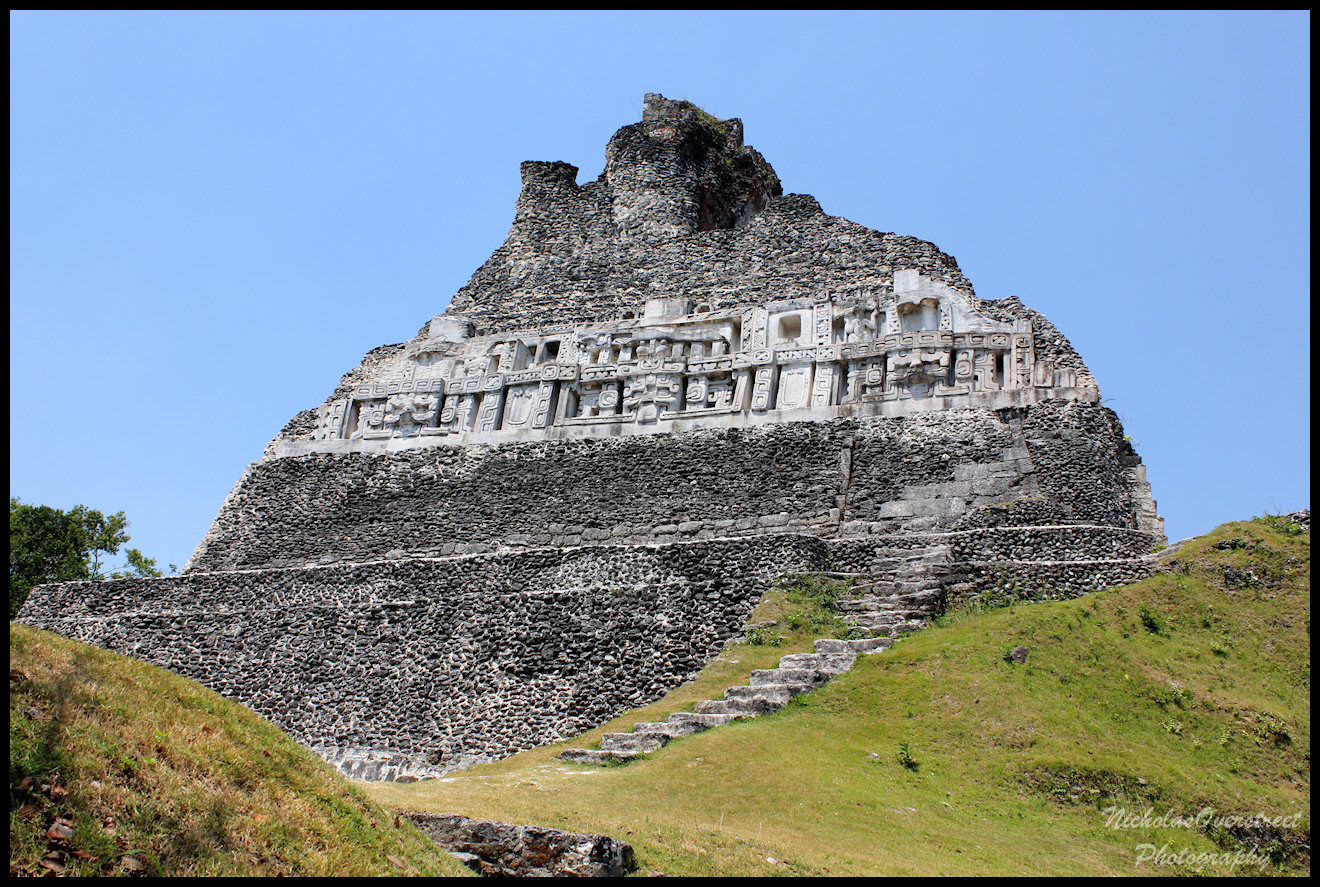
Xunantunich Maya Ruins

The ancient Maya civilization was never ruled by one king or emperor. Instead, it was a loose confederation of independent kingdoms that were often at war with one another. The Maya civilization was, however, quite tight-knit, bound by a vast trade network, common language, and common religious beliefs. Many legends still abound about the Maya because their ancient hieroglyphic writing was undecipherable until recently. Today, archeologists are slowly piecing together a much more comprehensive history of the ancient Maya including titanic battles between legendary rulers in places like Xunantunich, Caracol, and Tikal (the latter is located just across the border in Guatemala).

And while the early Europeans did their best to “civilize” the Maya and eradicate their ancient culture, many Maya were living in remote, rural areas and thus escaped the wrath of the Spanish. As such, the Maya have preserved ancient dances like the Dance of the Deer, traditional foods like chocolate and corn, and textile skills.

If you’re interested in visiting ancient Maya sites or learning more about Maya culture, one of the best places to stay is Chabil Mar. Located in southern Belize, Chabil Mar is an award-winning luxury resort that offers cultural tours to learn more about the people, music, food, and cultures in Belize.

Visit our website Chabilmarvillas.com for more information on Belize and Chabil Mar, and don’t hesitate to send us an email, or call US/CAN Toll Free: 1-866-417-2377, Local: (011-501) 523-3606, if you have questions or need help in planning a Belize vacation.

The Mangrove Marvels of Placencia Lagoon

The Mangrove Marvels of Placencia Lagoon

Mangroves, those intertidal salt-tolerant trees that kiss coastlines all around the tropics, are nothing short of natural wonders. Conjuring images of vibrant coastal ecosystems where the greenery meets the blue, mangroves offer so much more than just a scenic backdrop; they serve as vital guardians of our coasts, brimming with life and whispering tales of the world’s evolutionary history.

Placencia, a slender peninsula located in the southern part of Belize, presents a fantastic window to explore these fascinating ecosystems. The Placencia Lagoon, lying on the western side of the peninsula, is one of the region’s jewels. This tranquil lagoon stands as a testament to nature’s architectural marvel, with mangroves fringing its edges and acting as a sanctuary for diverse wildlife.

The Placencia Lagoon Experience

The Placencia Lagoon Experience

As you approach the lagoon, the dense thickets of red, black, and white mangroves create a breathtaking spectacle. Their roots, resembling intricate natural sculptures, tangle downwards, anchoring the trees while offering refuge for countless marine organisms. The submerged roots act like nurseries, offering shelter to juvenile fish, crabs, and shrimps. Up above, the dense canopies are a haven for birds. Expect to spot egrets, herons, and perhaps even the rare roseate spoonbill making its graceful flight over the waters.

To truly immerse oneself in this mesmerizing world, taking a guided kayak tour around the lagoon is a must. Paddle silently through mangrove tunnels, feel the calm water underneath, and let the sounds of nature envelop you. You might catch a glimpse of the manatees that occasionally visit, or a saltwater crocodile lounging lazily in the sun.

The Monkey River Adventure

The Monkey River Adventure

For those looking to further their mangrove adventure, a boat ride from Placencia to the Monkey River is an enriching experience. As you cut through the pristine waters, mangrove fields stretch out as far as the eye can see, presenting an uninterrupted view of this coastal wonder.

But the highlight? The howler tour. Named after the black howler monkeys that are native to the area, you’ll be enchanted by their loud, haunting calls that echo through the forests. Witnessing these creatures in their natural habitat, surrounded by the thick mangroves and the untamed beauty of the Monkey River, is truly unforgettable.

Apart from the monkeys, the banks of the Monkey River are alive with numerous other wildlife. Iguanas basking in the sun, ospreys soaring in the sky, and the splash of a river otter diving into the water are common sights. And of course, the mangroves stand tall throughout, silently watching over the vast biodiversity they sustain.

Stay at Chabil Mar: The Ideal Base

The Ideal Base

Exploring the mangroves and the beauty of the Placencia region requires a tranquil and comfortable base. Enter Chabil Mar. Nestled along the Placencia coastline, this boutique resort not only offers luxury and Belizean charm but also immediate access to the peninsula’s wonders.

With its villas overlooking the Caribbean Sea, personalized service, and a delightful blend of traditional and modern aesthetics, Chabil Mar ensures a restful stay. After a day of exploring the mangroves or listening to the howlers, unwind at the resort’s pool, enjoy a dinner featuring local flavors at the on-site restaurant, or simply relax on your private veranda with views of the moonlit sea.

Mangroves, with their mystique and ecological significance, have always beckoned travelers. In Placencia, their charm is amplified manifold. Whether you’re silently kayaking through the lagoon’s calm waters, witnessing howler monkeys, or simply relaxing at Chabil Mar with the vast sea in front of you, the mangroves and their surroundings promise memories that will linger long after your trip ends. So, come to Placencia, delve deep into its natural wonders, and let the mangroves tell you their age-old stories.

Visit our website chabilmarvillas.com for more information on Belize, and don’t hesitate to send us an email, or call US/CAN Toll-Free: 1-866-417-2377, Local: (011-501) 523-3606, if you have questions or need help in planning a Belize vacation.

Diving Placencia Belize – What You Need to Know Before You Go

The Placencia Peninsula is a 16-mile long strip of golden beaches jutting outside from the southeastern Caribbean coast of Belize. Still a laid-back eco-friendly place that more than lives up to its “barefoot perfect” motto, Placencia is the gateway to all of the best dive spots on the southern half of the great Belize Barrier Reef, a UNESCO World Heritage Site with clear waters and white sandy seafloors that teems with hundreds of colorful marine flora and fauna species.

Laughing Bird Caye


Many people come to Placencia Village to stroll along the beach, zoom around in golf carts, and generally take in the sights, but Placencia is also the perfect place to access the world-class dive sites that have made Belize so famous.

One of the premier dive sites just a short distance offshore from Placencia is the Laughing Bird Caye National Park. Just 11 miles from Placencia Village, Laughing Bird Caye is a national park and the southernmost island in the central lagoon portion of the Belize Barrier Reef.

Laughing Bird Caye (in Belize, islands are known as “cayes”, pronounced “keys”) is located on a narrow stretch of the reef technically called a faro. The sides of the faro are quite steep and the waters offshore are separated by deep channels that connect it to the rest of the barrier reef. This unique physical structure makes it the perfect place for fish to spawn and hide from predators. The enormous numbers of fish and other marine animals in the area draw in other creatures, making it a top dive spot.

The island gets its name from the Laughing Gull bird that once used the caye for a breeding ground. Laughing Bird Caye has been a protected marine park since 1981.

The Silk Cayes


The Silk Cayes are a three islands that lie inside the Gladden Spit and Silk Cayes Marine Reserve, a protected natural area since 2000. The Silk Cayes are located approximately 22 miles off the coast of Placencia.

Gladden Spit is an elevated piece of land located on the southernmost tip of a long atoll, itself a popular dive site. The three Silk Cayes, North Silk, Middle Silk, and South Silk, are located on the southern approach to Gladden Spit.

This is a premier dive area in southern Belize because the elevation and water quality make it one of the healthiest and most ecologically diverse parts of the Belize Barrier Reef.

Chabil Mar is an award-winning luxury resort located just a five-minute walk from Placencia Village and is a great place to stay to enjoy all the best dive spots in southern Belize.

For more information about diving in Belize or Placencia, feel free to chat with our Concierge at: concierge@chabilmarvillas.com or contact our Reservations Manager at: reservations@chabilmarvillas.com. Or perhaps you would like to call toll free from the US or Canada: 1-866-417-2377.

Archives