The Placencia Airport (three digit code: PLJ) is a small airport that serves the Placencia Peninsula in southeastern Belize. The airport is located directly on the Placencia Peninsula about three miles from Placencia Village on the southern tip of the peninsula. The airport underwent an expansion and enhancement project a few years ago, which included the installation of evening lights. These upgrades enabled the airport to accommodate a higher volume of flights, including evening arrivals and departures.
Placencia Airport has a single paved runway that currently only handles domestic flights, although there are plans in the works to expand an airport in the area in order to receive international flights. Currently, all flights to and from the Placencia Airport are served by the Belizean air carriers Tropic Air and Maya Island Air, both of which have multiple daily connections to Belize City and other destinations across the country, including Punta Gorda and Dangriga.
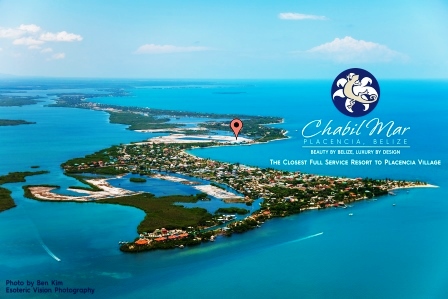
From Belize City to Placencia, the flying time is around 45 minutes in the air. The Placencia Peninsula measures about 16 miles from north to south and just a quarter-mile wide at the widest point. The unofficial capital of the peninsula is Placencia Village, still largely an idyllic fishing village with a population of around 1,000 residents. The Placencia Peninsula is located in the southeastern corner of the Stann Creek District.
The eastern side of the Placencia Peninsula is composed of beautiful white sand beaches fronting the Caribbean Sea while the western border is a mangrove-lined lagoon teeming with fish and wildlife. Placencia Village holds a spot in the Guinness Book of World Records for the town with the smallest “main street” in the world, a pedestrian-only 4,000-foot long sidewalk measuring just four feet across. From south to north, there are loosely-defined communities that begin with Placencia Village and continue on to a Garifuna Village named Seine Bight and then onto Maya Beach, at mile six and eight north on the Peninsula.
Popular local events include the End of the World Marathon that first began as a humorous reference to a date on the Maya calendar that supposedly predicted the apocalypse in December 2012 and Lobsterfest, a multi-day beach party and culinary competition held every July to celebrate the opening of the lobster fishing season.
Placencia is rapidly becoming one of the top visitor destinations in the country, with many lovely resorts and inns giving guests access to both the nearby islands on the Belize Barrier Reef and top destinations on the mainland. Nearby attractions include the Cockscomb Basin Nature Reserve (home to the world’s first dedicated jaguar conservation mission), boat tours up the eponymous Monkey River, and the enormous ruins of ancient Maya cities such as Lubantuum and Nim Li Punit.
For more information about visiting Placencia, feel free to chat with our Concierge at: concierge@chabilmarvillas.com or contact our Reservations Manager at reservations@chabilmarvillas.com. Or perhaps you would like to call toll free from the US or Canada: 1-866-417-2377 or WhatsApp us at +501-633-7547.
Easily recognizable from space, the Belize Blue Hole, sometimes known as the Great Blue Hole, is one of the most iconic dive spots in Belize.
Here are 10 fascinating facts about the Belize Blue Hole:
1 – Size and Dimensions
The Belize Blue Hole is almost perfectly circular in shape, measuring 300 meters (984 feet) across and 108 meters (354 feet) deep.
2 – The Largest Sea Hole in the World
The Belize Blue Hole is the largest sea hole in the world. Sea holes refer to caves that were submerged when rising waters covered them. Most sea holes, just like the Belize Blue Hole, were submerged at the end of the last great Ice Age some 10,000 years ago.
3 – Location
The Belize Blue Hole is located approximately 100 kilometers (62 miles) offshore of Belize City. The perimeter of the Blue Hole is Lighthouse Reef, a natural coral atoll.
4 – Stalactites and Stalagmites
Divers can explore thousands of stalactites and stalagmites that were formed when the Blue Hole was an aboveground series of caverns.
5 – Jacques Cousteau
Legendary French documentarian and marine biologist Jacques Cousteau visited the Blue Hole in 1971. He later described the Blue Hole as one of his top favorite 10 dive sites in the world.
6 – The Name
The name “Great Blue Hole” comes from British diver Ned Middleton who wrote a book about his career as a diver in 1988 named “Ten Years Underwater”. Although the Blue Hole was charted by the Spanish, no one is sure what name they gave for the region.
7 – Discovery Channel
In 2012, the Discovery Channel ranked the Belize Blue Hole as the #1 most amazing place on Earth.
8 – UNESCO World Heritage Site
The Belize Blue Hole is a UNESCO World Heritage Site, part of a vast barrier reef that is the second-largest barrier reef in the world after Australia’s Great Barrier Reef.
9 – Charles Darwin
In 1836, on his around the world voyage aboard the HMS Beagle, Charles Darwin visited the Belize Barrier Reef and declared it the “most remarkable coral reefs” in the entire Caribbean.
10 – Experienced Divers Only
Due to the challenges of diving the Belize Blue Hole, only divers who have completed at least 24 divers are allowed to explore the Belize Blue Hole.
About The Belize Blue Hole
Long a secret known only to Belizean fisherman, the Belize Blue Hole became famous in 1971 when legendary marine biologist and undersea explorer Jacques Cousteau visited the site.
Cousteau and his crew aboard the Calypso explored the depths of the Blue Hole, confirming that it had been created thousands of years ago when rising tides flooded a network of caves. Declared by Cousteau as one of the top 10 best diving spots on the planet, the Belize Blue Hole is located approximately 60 miles (100 km) from the coast of Belize.
A nearly perfectly circular body of water, the Belize Blue Hole is surrounded by the Lighthouse Reef Atoll. Divers can use the shallow waters of the atoll’s lagoon to begin their descent to the now-flooded cave that contains stalactites and stalagmites up to 40 feet (12 meters) in length.The coral atoll surrounding the Belize Blue Hole has an inner ring of shallow, lighter colored water that forms a natural ring around the deeper sapphire waters of the flooded cave.
Thousands of years ago when the cave flooded, the Belize Blue Hole was formed, a vertical entrance over 980 feet (300 meters) across with a bottom more than 400 feet (125 meters) below the sea’s surface today.As divers descend into the Great Blue Hole, the dark waters start to become more clear, allowing for an impressive view of the flooded cave network that is home to a variety of marine life, including a few elusive hammerhead sharks.
Due to the complexity and depth of the dive, only experienced divers are permitted to explore the majestic underwater formations that make the Belize Blue Hole such a unique dive site.
The Blue Hole is located along the Belize Barrier Reef, a UNESCO World Heritage Site part of the second-largest barrier reef system in the world.
An almost perfectly circular area of dark topaz water encircled by the Lighthouse Atoll on the Belize Barrier reef, the Great Blue Hole is one of the most intriguing and popular places to dive anywhere on Planet Earth.
Facts About The Belize Blue Hole
1.) The Blue Hole measures about 1,000 feet in circumference and is more than 400 feet deep. It is the largest natural formation of this type found anywhere in the world.
2.) The Blue Hole was formed at the end of the last Ice Age when rising seawaters flooded a series of enormous caverns. Geologists have determined that the caves first formed about 153,000 years ago and were completely submerged approximately 15,000 years ago.
3.) The Blue Hole is approximately 60 miles offshore from Belize City and is part of the Belize Barrier Reef, a UNESCO World Heritage Site.
4.) In 1971, famed French marine biologist Jacques Cousteau visited the Blue Hole with his boat Calypso, declaring it one of the top 10 diving spots on the planet.
5.) The underwater caves of the Blue Hole are filled with giant stalactites, proof that it once existed above water.
6.) The Blue Hole is home to several species of sharks, including bull sharks, Caribbean reef sharks, and the elusive hammerhead shark.
7.) In 2012, the Discovery Channel ranked the Blue Hole as #1 on its list of 10 Most Amazing Places on Earth.
8.) The Blue Hole is visible from space, easily identifiable by its unique circular formation and location within the midst of the greater Belize Barrier Reef.
9.) The name “Blue Hole” was coined by the British diver Ned Middleton in his book “10 Years Underwater” published in 1988.
10.) Due to the complexity of diving required, the Blue Hole is restricted to experienced divers only with a minimum of 24 completed dives.
What It’s Really Like To Dive The Great Blue Hole
The Mysterious Belize Great Blue Hole is a large underwater hole off the coast of Belize. It lies near the center of Lighthouse Reef, a small atoll 100 kilometers (62 mi) from the mainland and Belize City. The hole is perfectly circular in shape, over 300 meters (1000 ft) across, 3140 feet circumference and 125 meters (410 ft) deep.
It was formed as a limestone cave system during the last glacial period when the sea level was 400 to 500 feet below present time and was dry land. Last glacial period began about 120,000 years ago and end about 15,000 years ago. Reaching the maximum extension 26,500 years ago. At the end the ocean began to rise, the caves flooded, and the roof collapsed.
Believed to be the world’s largest feature of its kind, the Great Blue Hole is part of the larger Belize Barrier Reef Reserve System, a World Heritage site of the United Nations Educational, Scientific and Cultural Organization (UNESCO).
The hole itself is the opening to a system of caves and passageway that penetrate this undersea mountain. In various places, massive limestone stalactites hang down from what was once the ceiling of air-filled caves thousand of years before the end of the last Ice Age 15,000 years ago. When the ice melted the sea level rose, flooding the caves. This process occurred in stages. Evidence for this are the shelves and ledges, carved into the limestone by the sea, which run the complete interior circumference of the Blue Hole at various depths.
The Blue Hole is a “karst- eroded sinkhole.” It was once a cave at the center of an underground tunnel complex whose ceiling collapsed. Some of the tunnels are thought to be linked right through to the mainland, though this has never been conclusively proved. Notable are the large population of sharks such as lemon, black tip, reef, hammerhead, and bull sharks.
Mysterious and legends always have been around the Belize Blue Hole.
This was the entrance to Xibalba?. It’s the kind of underwater geology that inspires speculation about aliens creating geometrically perfect anomalies, mermaids and monsters living in darkness.
I explored the bottom of the Blue Hole perimeter (3,140 feet circumference). To do this I dove down twice, reaching the depth of 375′ feet which took 4 to 5 hours of diving each day.
Video Music:
Start to 2:18 min. “Dawn From Four Sea Interludes” by Benjamin Britten 2:18 to 4:37 min. “300 Violin Orchestra” by Jorge Quintero 4:37 to End “Groove Armada” from Tomb Raider Soundtrack
Video and Blog courtesy of Ramon Llaneza
If you would like to explore the wonders of the Belize Blue Hole, the resort of Chabil Mar has a comprehensive scuba diving vacation package that includes a guided trip to the Blue Hole.
Visit our website Chabilmarvillas.com for more information on Belize and Chabil Mar, and don’t hesitate to send us an email, or call & chat with us via WhatsApp Free Worldwide: +501-633-7547, Local: (011-501) 523-3606, if you have questions or need help in planning a Belize vacation.
Belize is located in Central America between Mexico’s Yucatan Peninsula and Guatemala. Belize is the only English-speaking country in the region and has a long coastline on the Caribbean Sea.
Although relatively small, Belize has an incredibly diverse landscape, including misty mountains, enormous waterfalls, pristine rivers, savannah, jungles teeming with wildlife, massive cave systems, and hundreds of offshore islands along the Belize Barrier Reef, the second-largest barrier reef in the world.
Misconceptions About Belize
Is Belize an island?
No. Belize is on the mainland of Central America, although it does have hundreds of offshore islands.
Is Belize located in the Caribbean?
Belize has a Caribbean culture as well as a lengthy coastline along the Caribbean, but Belize is not technically “in” the Caribbean as it is located on the mainland of Central America.
Is Belize located in South America?
No. Belize is in Central America. For purists that only consider South and North America to be true continents, Belize would be located in North America.
Is Belize in Honduras?
No. Belize was called British Honduras back during the colonial days, but it got this name because the southern part of the country opens onto the Bay of Honduras. Today, Belize and Honduras are two separate nations separated by a narrow band of land belonging to Guatemala. It takes about two hours with a boat to travel from Punta Gorda in the south of Belize to Puerto Cortez in Honduras.
What’s the Right Way to Spell Belize?
Over the centuries, Belize has been spelled lots of different ways, including Belieze, Belise, Balize, and Beleez. The official name of the country in English is Belize, which you better “Belize” matters to the people who live there!
Facts About Belize
The official location of Belize is 17 degrees 15 minutes north and 88 degrees 45 west.
Belize has approximately 360,000 people.
English is the official language of Belize but other languages spoken in the country include Spanish, Mennonite German, Maya, and Garifuna.
Belize is about two hours flying time from Miami or Dallas/Houston.
Belize has 240 miles (386 km) of Caribbean coastline and hundreds of offshore islands.
Belize has a landmass of around 8,860 square miles (22,960 square km), just a bit bigger than the state of Massachusetts.
The highest point of land in Belize is Doyle’s Delight at 3,688 feet (1,124 meters).
Islands in Belize are known as “cayes” (pronounced “keys”).
Belize Maps
Map of Placencia Belize
Map of Placencia and Chabil Mar
Only about 2,000 year-round residents live in the village located on the southern tip of the Placencia Peninsula. The village is a fifteen-minute stroll along the beach or 5-minutes by bike, kayak or paddle board from Chabil Mar. (Click on the Map for Larger Image and to Zoom)
Belize Map in relation to Central America
Belize shares its northern border with Mexico and is bounded on the west and south by the nation of Guatemala. (Click on the Map for Larger Image and to Zoom)
Placencia Reef and Dive Locations Map
Many of the best diving spots along the reef are just minutes from Chabil Mar. This map shows these, including Laughing Bird Caye and Gladden Spit. (Click on the Map for Larger Image and to Zoom)
Belize Diving Map
Diving locations in and around the Belize Barrier Reef are numerous, and this map shows the best spots. (Click on the Map for Larger Image and to Zoom)
Belize Atolls Map
Often described as a “coral atoll”, an atoll is a ring of coral that has a lagoon in its center. The circumference of the atoll is dry land, and Belize has hundreds of these atolls in the Caribbean up and down the Belize Barrier Reef. (Click on the Map for Larger Image and to Zoom)
Belize Geography Map
Belize has a varied geography, with rolling hills and higher elevations in the southwest and west to lush agricultural flat lands in the north and southeast. Rainforest and jungle occupy much of Belize, and the country has a long coastline on the Caribbean with hundreds of offshore islands. (Click on the Map for Larger Image and to Zoom)
Map of Placencia, Belize
This 16-mile long finger of land is located on the coast of southeastern Belize in Stann Creek District. Chabil Mar is located just north of the village on the eastern side of the peninsula. (Click on the Map for Larger Image and to Zoom)
One of the most popular destinations in Belize, Placencia is a charming, low-key fishing village located at the southern tip of the Placencia Peninsula in southeastern Belize. Bordered on one side by a lovely mangrove-lined lagoon and on the other by the Caribbean Sea, Placencia is renowned for having some of the most beautiful beaches in the country.
The Placencia Peninsula measures approximately 19 miles from north to south but is just half a mile wide. With the look and feel of an island, it’s no surprise that Placencia is often described as the “caye (island) you can drive to.” But despite its popularity as a tourist destination, the main activities in Placencia are strolling the beach or motoring around on an electric golf cart.
The southeastern coast of Belize is famous for its natural beauty. Although luxury resorts and condominium developments have sprung up, Placencia has successfully managed to retain its old-world charm. Locals still head out to sea every morning in small boats to bring in the daily catch, and visitors can meander along the village’s 4,000-foot long “main street” that is a pedestrian-only sidewalk adorned with colorful murals and artwork.
Placencia is just one of three villages located on the peninsula but has lovely shops, charming cafes, seafood restaurants, a small medical clinic, and an airfield.
Whether you coming for a family vacation, a destination wedding, or romantic honeymoon, Placencia is one of the most beautiful spots in the country. It also serves as the gateway to the southern reef, a mecca for maritime activities such as snorkeling, scuba diving, fishing, and sailing.
And on the mainland, nearby attractions include hiking through the vast Cockscomb Basin Nature Reserve (home to some of Central America’s last surviving jaguars), learning about native wildlife and plants on a boat trip up the aptly named Monkey River, and touring ancient Maya ruins such as Nim Li Punit and Lubantuum.
Silk Cayes, a popular snorkeling destination off the coast of Placencia
Lonely Planet, the largest travel guide book publisher in the world describes Placencia as follows:
“How you wind up feeling about Placencia really depends on what you’re looking for. If it’s laid-back ambience, varied accommodations and some of the best restaurants in Southern Belize, this beachfront paradise may well prove to be your personal Margaritaville. If it’s off-the-beaten-path adventure and cheaper living you’re after,Placencia might serve better as a way-station. Come on down for a few days of sandy beaches, sunny skies and great seafood before heading off to less trodden paths.”
If you are traveling to Placencia very soon, here are 25 things you need to know:
Chabil Mar in Placencia Belize
Placencia Village sits at the very tip of the narrow 16 mile Placencia Peninsula in Southern Belize.
Chabil Mar is located in Placencia Village. While other resorts along the Peninsula regularly advertise their location as Placencia Village, they are on the Placencia Peninsula as much as 12 miles north of the Village, in the communities of Seine Bight and Maya Beach, for instance.
To a lot of people, the Placencia Peninsula feels like an Island but it is not. Less than 2000 people live in Placencia Village.
The Placencia Peninsula is also home to two other communities: Seine Bight and Maya Beach.
The name “Placencia” is actually a distortion of Punta Placentia, the name the Spaniards gave to the peninsula in the 1800s.
In English, it means Point Pleasant.
The Main Street in Placencia Village is just a sidewalk! In fact, the “Guinness Book of World Records” recognizes it as the narrowest main street in the world.
Whale Sharks off the coast of Placencia Belize
Many people visit Placencia during the months of April, May and June to swim, dive or snorkel with giant whale sharks at the Gladden Spit Marine Reserve.
Placencia’s Lobsterfest is the village’s most famous festival and is held in July of every year. In 2013, the Placencia Lobsterfest won an award from the Belize Tourism Board as the Festival of the Year!
An Arts Festival is held in February each year, that brings artists from all over Belize to showcase their art along the 4071 foot (3/4 mile), 4 foot wide Placencia Sidewalk.
Placencia was once a sleepy fishing village.
The Placencia Peninsula boasts 16 miles of tranquil beaches.
Many travelers who vacation in Placencia do the Monkey River and the Cockscomb Basin Wildlife Sanctuary Tours.
Cockscomb Basin Wildlife Sanctuary is one of the top tours to do from Placencia
Placencia has a range of Belize resorts and hotels that can fit almost any budget.
Placencia is 35 minutes away from Belize City by air.
The road into Placencia Village is bordered by the lagoon on one side and the turquoise Caribbean on the other, and ends at the end of the Peninsula.
Placencia is world renowned for offshore fishing, diving and snorkeling.
Placencia is also well known for its very laid-back, no-shoes ambience where locals go out of their way to make sure you enjoy your visit.
Laughing Bird Caye is another popular attraction that is located off the coast of Placencia
The average temperature in sub-tropical Placencia is 80 degrees Fahrenheit.
Anytime of the year is good to visit Placencia.
Getting around Placencia is very easy.
Francis Ford Coppola, the American Film Director, Producer and Screenwriter owns a resort in Placencia.
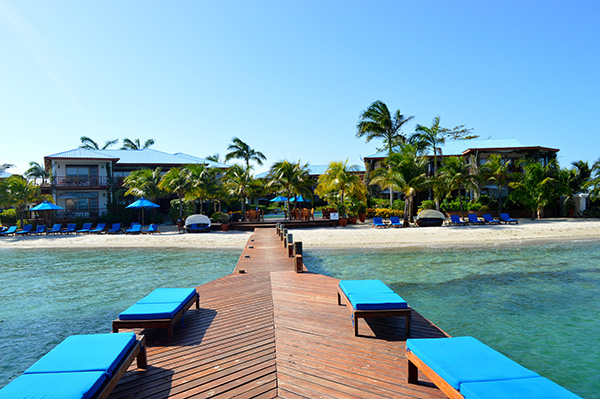
Placencia is home to many world class luxury resorts like Chabil Mar.
Laughing Bird Caye is a favorite camping site for reef kayakers who base their expeditions in Placencia.
Placencia is also known for its great food and restaurants.
The Placencia Lagoon is an imperative breeding area for saltwater crocodiles, marine turtles and the rare and endangered manatees.
Visit our website chabilmarvillas.com for more information on Placencia Belize, and don’t hesitate to send us an email, or call US/CAN Toll Free: 1-866-417-2377, Local: (011-501) 523-3606, if you have questions or need help in planning your Belize vacation.
While no one knows the original name of the cave, today it is called Actun Tunichil Muknal (ATM) Cave from a Maya term meaning “Cave of the Stone Sepulcher”. Sometimes referred to as the Cave of the Stone Altar, ATM is a complex underground network of tunnels that lead to one of the most important historic sites ever discovered. Containing over 1,400 artifacts from the end of the Ancient Maya Empire that have lain undisturbed for more than a millennium, the ATM cave was once used by priests to conduct human sacrifices at a time of drought, warfare, and civil strife.
The entrance to ATM Cave is protected by a deep pool of cool water that visitors must traverse by swimming. Once inside, the cave opens up to a series of enormous stalactites and stalagmites. The first indication of the cave’s religious importance is a large stone altar carved from a stalactite with a stingray spine as its centerpiece, the altar or sepulcher that gave the cave system its current name. All around the altar lie potsherds, bone fragments, relics and other artifacts left behind by the Maya priests more than a thousand years ago.
Further in, towards what the Ancient Maya believed was the sacred nexus where the underworld of the gods connected to the world of men, lie the bones of the Crystal Maiden. This sacrificial victim, estimated to be a young adult in their 20s, has, over time, bonded with the minerals in the cave to acquire a glittery sheen. Nearby lie the remains of seven adult sacrificial victims as well as those of five children all under the age of 5. Thousands of fragmented pots and vessels are scattered near the bones, including some largely-intact pots and bowls that archeologists believe once held food offerings to appease the gods. Other artifacts include the obsidian blades that are believed to have been used in the solemn but gruesome human sacrifices conducted by Maya priests.
Archeologists have estimated that the ATM cave first became a site used by the Maya for religious purposes nearly 2,000 years ago. The most recent remains are dated to the Terminal-Classic Period (roughly 800 to 1000 AD), a time when the Maya heartland was suffering from severe drought and civil wars. Forgotten for more than a thousand years, the ATM cave was rediscovered in 1989 by local archeologists.
Due to the fragile nature of the artifacts within, only guides authorized by the Department of Archeology can access the ATM Cave. At Chabil Mar, we offer guests guided tours of this unique historical site in Belize. Our concierge would be very pleased to make those arrangements for a visit there for you.






Follow Us!