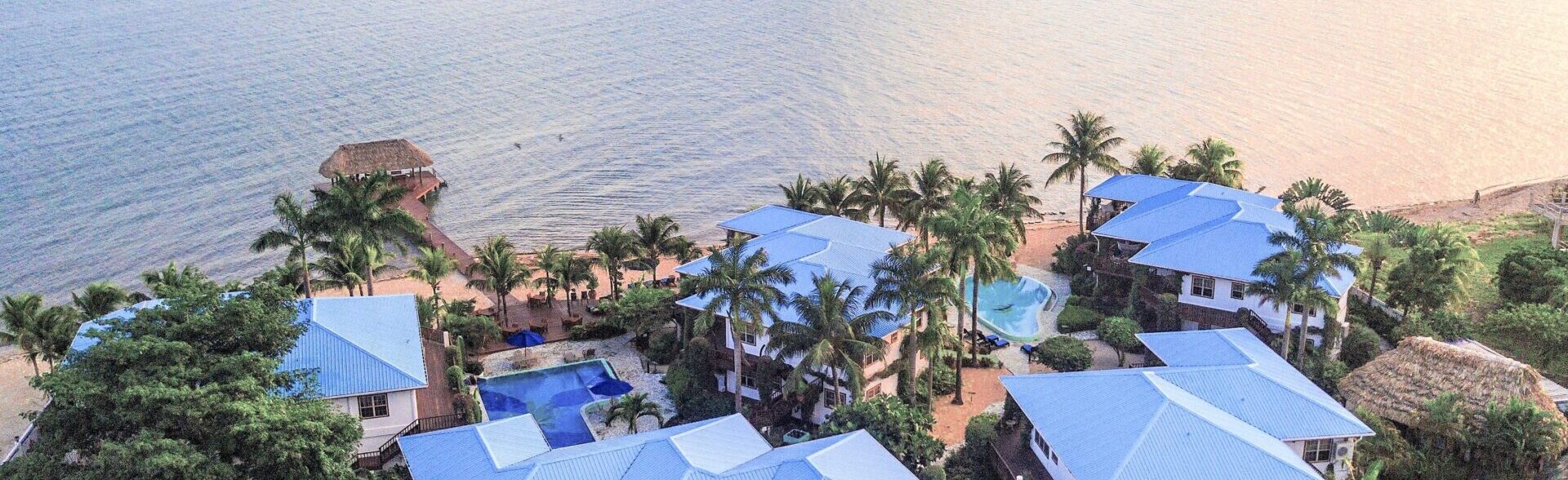
Why Placencia Is Called the “Barefoot Perfect” Destination

Some destinations are luxurious. Others are authentic. A rare few manage to be both at the same time. Placencia Belize is one of those places, often described as “barefoot perfect” by travelers who experience its unique balance of simplicity, beauty, and comfort.

This phrase captures more than just a feeling. It reflects a way of traveling where you can walk freely along the beach, connect with local culture, and enjoy refined accommodations without formality or pretense. In Placencia, luxury feels natural and effortless, making it one of the most appealing destinations in the Caribbean.

For guests staying at Chabil Mar, this barefoot perfect experience becomes even more meaningful.

A Place Where Simplicity Meets Beauty

Placencia Belize Travel

Placencia is defined by its natural charm. Sixteen miles of coastline stretch along the peninsula, offering soft sand, calm Caribbean waters, and wide open views. There are no towering resorts or crowded shorelines. Instead, the environment feels open, peaceful, and inviting.

Walking barefoot along the beach is not just a moment. It is part of daily life here. Mornings begin with the sound of waves and gentle sea breezes. Afternoons invite relaxation by the water or quiet exploration of the shoreline. Evenings bring warm sunsets that reflect across the sea.

This simplicity is what makes Placencia feel perfect. Nothing feels forced. Everything feels easy.

Authentic Village Life and Genuine Connection

Placencia Belize guide

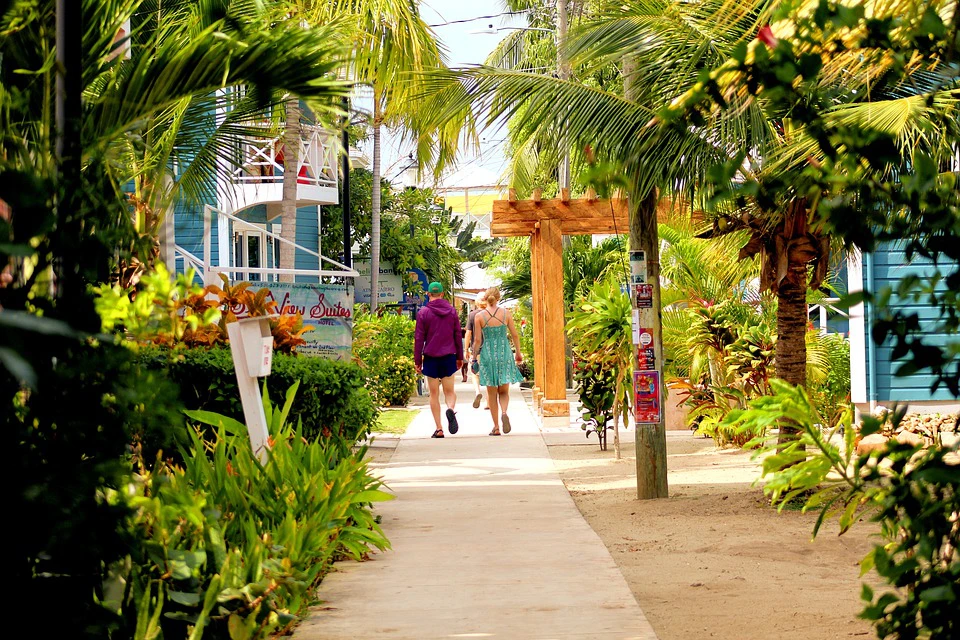
Placencia’s charm extends beyond its beaches into the heart of the village. The Placencia Sidewalk is a symbol of this lifestyle, connecting small shops, cafes, art galleries, and beachfront restaurants in a way that encourages exploration and interaction.

Travelers are not separated from local life. They become part of it, even if only for a short time. Conversations happen naturally. Meals are shared slowly. Music drifts through the air in the evenings.

This authenticity is a key part of what makes Placencia barefoot perfect. It is not just about where you stay. It is about how you feel while you are there.

Why Chabil Mar Defines Barefoot Luxury

chabil mar villas

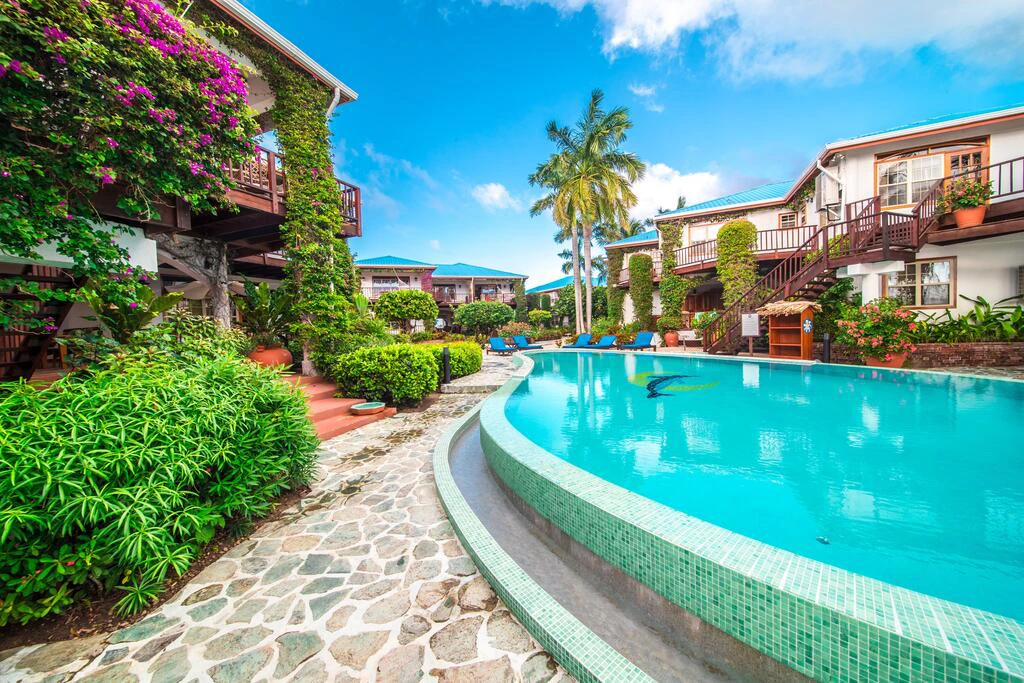
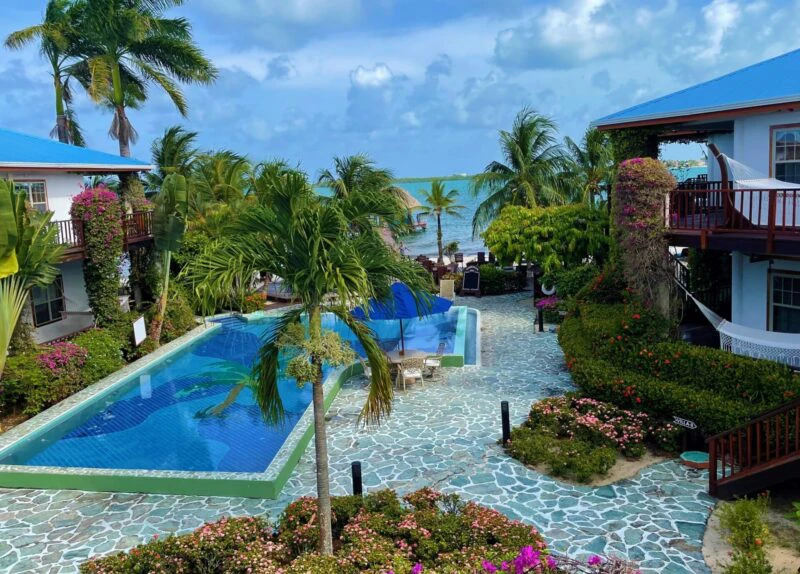
Chabil Mar Villas embodies the essence of barefoot perfect living. As the only guest exclusive resort on the Placencia Peninsula, it offers privacy and tranquility while remaining deeply connected to the surrounding community.

The villas are designed with Belizean craftsmanship, blending natural materials with elegant comfort. Guests can step directly from their villa onto the beach, move effortlessly between pool and sea, and enjoy a level of service that feels thoughtful rather than formal.

Placencia Belize guide

What makes Chabil Mar unique is its balance. It offers luxury without distance, comfort without excess, and service without intrusion. Guests can explore Placencia Village, experience local culture, and return to a peaceful retreat that feels entirely their own.

Placencia has earned its reputation as a barefoot perfect destination because it offers something that many travelers are searching for but rarely find. A place where life slows down, where beauty is natural, and where luxury feels genuine.

Experience why Placencia is called the barefoot perfect destination with a stay at Chabil Mar, where simplicity, comfort, and Caribbean beauty come together effortlessly.

Visit our website Chabilmarvillas.com for more information on Belize and Chabil Mar, and don’t hesitate to send us an email, or call & chat with us via WhatsApp Free Worldwide: +501-633-7547, Local: (011-501) 523-3606, if you have questions or need help in planning a Belize vacation.

The Mestizo Culture of Belize

Mestizo Culture of Belize

In Spanish, the term “Mestizo” means “mixed” as in mixed race, but this is not a very apt description for the Mestizo people of Belize. In reality, the Mestizos were originally immigrants that began arriving in Belize after fleeing from a race-based civil war in neighboring Mexico in the 19th century called the Caste War.

Initially, the Mestizos brought much of their original culture with them, including the Catholic faith and the Spanish language. Over time, however, the Mestizos have integrated into the wider Belizean society, many having adopted other Christian faiths as well as being bilingual in both English and Spanish.

Today, the Mestizos are primarily located in the two northernmost districts of Belize, Corozal and Orange Walk, as these border regions were largely uninhabited in the mid-19th century. The Mestizos were instrumental in Belize’s burgeoning agricultural sector, especially sugarcane production. The Mestizos now form the second-largest cultural group in Belize after the Creoles.

Mestizo culture is rich with a blend of Catholic and indigenous traditions. Perhaps their most well-known story tells a tale of Xtabai (pronounced ish-ta-buy) who was a powerful spirit that lives in the jungle. According to legend, the Xtabai waits at night on the edge of town for an intoxicated or lost man to wander by. The Xtabai then lures the man into the jungle, sometimes just to taunt them, but sometimes to hurt or even kill them. During the day, however, the Xtabai takes the form of a tree or a snake.

Mestizo music is heavily influenced by Spanish traditions. No Mestizo gathering would be complete without some guitar music, especially a song called the Serenata (Serenade) that was traditionally sung by young men outside the bedroom window of their beloved. Mestizo music often recalls the rollicking rhythms of flamenco, rumbia, and salsa with lyrics that tell stories of rural life, love, and death. Other typical Mestizo musical instruments include harps, trumpets, and violins.

Mestizo cooking is similar but distinctly different than Mexican food. Mestizo villages often have a large communal kitchen where tasty treats are made such as tortillas, tacos, and tamales. Mestizos are also renowned for their textile work and handicrafts that feature simple yet elegant floral designs.

The lovely beach resort of Chabil Mar on the Placencia Peninsula in southeastern Belize is a great place to stay for visitors who want to learn more about Belizean culture and people, including the Mestizos.

Where To Find Howler Monkeys in Belize

Howler Monkeys in Belize

Do you have to be a kid to develop a fascination with primates? Not if you like being entertained. While the globe’s primate population may be declining, “New World Monkey” species making their homes from Mexico to Argentina are thriving. 

Just ask editors at Nature.com. Their roster of monkey types begins with the one and only howler monkey, a mammal that can be heard from a distance of half a mile away.

Howlers are the most audaciously outspoken critters in Belize. They’re most likely to make themselves known when anything or anyone—-human or animal—-attempts to invade their neighborhoods. Don’t believe us? Check out this YouTube video for a sampling of their howls:

Howler monkeys inhabiting Belize’s forests and jungles rarely search for sustenance because it’s all around them. Though classified as omnivores, howler diets tend to be vegetarians, always on the lookout for raw fruits and vegetables that keep energy levels high enough to race from branch to branch over forest and jungle canopies.

Belize’s howlers are quite happy to be living in a nation that offers so much dietary variety that it’s easy to maintain an average weight of between 15 and 22 pounds. Are there overweight howler monkeys? Not really. They move around too much and so much activity results in an average lifespan of from 15 to 20 years.

It’s unusual to find a howler hanging out alone. These creatures stay in family groups that can number up to 20 kin. Like most primate groups, an older male is likely the head of the household, but everyone in the clan has a unique personality.

Despite the danger indigenous jaguars present, howler monkeys love to “irritate” these big cats on the ground by pelting them with branches and sticks for fun. Far from reach on distant tree branches, howlers are smart enough to know that if they get closer, they could become lunch.

Howler monkeys have excellent vision and they are enthusiastic swimmers. They love to hang out along the Monkey River. Wouldn’t you like if someone named a body of water in your honor?

What’s the best way to see these entertaining creatures? Come to Belize for a visit and take in Belize’s Monkey River Tour, not far from Placencia Village.  Once there, feel free call these howlers by their Latin name Alouatta pigra or use the Creole word Baboon to get their attention.

About The Monkey River Howler Tour *

You will never forget a trip to Monkey River. Your trip begins dockside from Chabil Mar Resort, where your guide picks you up by boat, for your adventure. Prepare to weave your way through the mangroves, where it’s not uncommon to see a peaceful manatee lumbering by. Continue along the coastline where you will reach the mouth of the river at the Village of Monkey River. From there you will travel upstream through the Belize rainforest. Along the way you may witness exotic bird life, crocodiles and howler monkeys feeding in the shoreline trees of this tropical jungle paradise. You will then take a jungle hike and see amazing plant and animal life as you search for troops of exotic howler monkeys. Back at Monkey River Town, you’ll enjoy a traditional Belizean lunch and an optional walkabout in the idyllic Belizean village. Then it’s back onboard your skiff for the return trip back up the coast and through the mangroves to Chabil Mar Resort, with a stop to view the manatees lumbering at a nearby island favorite of theirs.

Advance reservations are currently being snapped up so take advantage of Chabil Mar deals while you can. Just imagining yourself at Chabil Mar is likely to buoy your spirits and make your current situation more tolerable!  

The Marvelous Maya Mysteries of Caracol Ruins: Exploring Belize’s Enigmatic Past

The Maya Ruins of Caracol

Caracol is one of the most interesting and well-preserved ancient Maya sites in Belize. Previously known as Uxwitza (“Three Water Hill”) to the ancient Maya, the current name of the site was coined in 1938 when the local British head archeologist dubbed it Caracol (Spanish for “Snail Shell”) on account of the curving access road that leads to the site.

Far bigger than even Belize City, Caracol once housed up to 180,000 people at the height of the city’s power. Caracol dominated the ancient Maya geopolitical world, variously allying or fighting against other city-states, including Naranjo and the UNESCO World Heritage Site of Tikal that is currently located just across the border in neighboring Guatemala.

The most famous building in Caracol is the Canaa (“Sky Palace). An enormous period that contains four palaces and three temples, Canaa is still the tallest building in the country at 141 feet (43 meters) high. Other important buildings and items discovered in Caracol include 24 religious altars, three large ball court, five big plazas, 24 carved stelae, reservoirs, causeways, and a very advanced astronomical observatory. A total of 35,000 lesser buildings have also been identified in Caracol along with more than 100 tombs.

Due to its enormous footprint (some 75 square miles), much of Caracol is still awaiting further excavation. A 2009 aerial survey was used to create a 3D map of how the city stands, including large sections of causeway and agricultural terraces that still lie buried in the jungle. The remote location of Caracol in the foothills of the Maya Mountains in southwest Belize also add to the difficulty of performing large-scale archeological work.

Caracol rose to the height of its power during the Maya classic period but the city seems to have been abandoned around the year 1050 for unknown reasons relating to the wide scale collapse of Maya civilization in the area. Once reclaimed by the jungle, the city was accidentally rediscovered in 1938 by a local logger named Rosa Mai who was in the area searching for mahogany trees.

Today, Caracol is located approximately 25 miles south of San Ignacio in the western Cayo District of Belize. The site of Caracol is within the Chiquibul Forest Reserve and is surrounded by both primary and secondary tropical rain forest. The abundance of carved stelae, altars, markers in ball courts, walls, and capstones have allowed archaeologists to accurately document the history of the city, including a monumental military victory of Tikal in the year 562 AD.

Chabil Mar in Placencia Belize & Caracol Mayan Ruins

Chabil Mar resort on the Placencia Peninsula is close to all of the most exciting mainland destinations in Belize. Guests of the resort can include a visit to Caracol Mayan Ruins as part of one of Chabil Mar’s fantastic Belize Reef & Jungle vacation packages.


Visit our website chabilmarvillas.com for more information on Belize, and don’t hesitate to send us an email, or call US/CAN Toll Free: 1-866-417-2377, Local: (011-501) 523-3606, if you have questions or need help in planning a Belize vacation.


Save

20 Amazing Facts About Belize

In this blog post, we bring to you 20 amazing facts about beautiful Belize.

belize facts

Belize Fact#1

Belize is the only Central American Country where English is the official language. Apart from English, there are many recognized regional languages: Kriol, Spanish, Garifuna, and Mayan.

Belize Fact#2

September 10 in Belize is celebrated as the National Day or St George’s Caye Day. On this day in 1798, Spanish forces were repelled by the British in the Battle of St George’s Caye, with no reported casualties on either side.

See also: 7 Reasons Why You Have to Travel to Belize this Summer

Belize Fact#3

Belize has a private enterprise economy that is largely dependent on agriculture, agro-based industry and merchandising. However tourism and construction and the recent discovery of oil field have presented new prospects for the country. The estimated GDP of the country is 1.354 billion dollars and the major trading partners are the United States of America, Mexico, Central America and the European Union.

facts about belize

Belize Fact#4

Belize obtained its independence from the United Kingdom on September 21, 1981. George Cadle Price was the first prime minister of Belize and he served from 12 September 1981 to 17 December 1984.

Belize Fact#5

The currency of Belize is Belize dollar and its ISO 3166 code is BZ. Since 1978, the official value is pegged at 2 BZD = 1 US dollar.

See also: Chabil Mar, Placencia’s Only Guest Exclusive Resort

Belize Fact#6

Belmopan is the capital of Belize and its name derives from the union of two words: “Belize” and “Mopan”. After the devastating Hurricane Hattie destroyed the former capital, Belize City, in 1961, the government was shifted to Belmopan in 1970.

Belize Fact#7

Belize has the only Jaguar reserve in the world which is known as Cockscomb Basin Wildlife sanctuary.

Belize Fact#8

The islands in Belize are called Cayes (pronounced “keys”) and total around 450 including those on the outer atolls.

belize facts and information

Belize Fact#9

Belize has around 900 Maya temple sites.

Belize Fact#10

The largest city of Belize is located at the mouth of the river Belize River and is known as Belize City. It has an estimated population of 79,600 and is the main port and the industrial hub of the country. It was discovered in the mid-17th Century by British lumber harvesters and was the capital of British Honduras.

important facts about belize

Belize Fact#11

The total land area of Belize is 8,867 square miles or 22,700 square kilometers.  The country’s greatest length, north to south, is 170 miles (274 km) and its greatest width, east to west, is 68 miles (109 km).  Using an offshore territorial limit of 20 km, the country covers 46,620 km2 (18,000 sq mi), of which only 49% is land.

See also: 25 Things You Need to Know Before You Travel to Placencia Belize

Belize Fact#12

Belize is in the Central Standard Time zone and does not observe daylight saving time.

belize resorts facts

Belize Fact#13

Belize is subtropical, with a mean annual temperature of 80o F.

Belize Fact#14

The first people to inhabit Belize were the Maya around 1500 B.C.E. As shown in archeological records, they established a number of settlements such as Caracol, Lamanai and Lubaantun.

belize information

Belize Fact#15

Belize’s Black Howler Monkeys are one of the top 10 loudest animals in the world.

See also: 12 Incredible Belize Vacation Photos

Belize Fact#16

Some of the exotic names for Belize’s natural wonders include the Owl-Eye Butterfly, the Blue Morpho Butterfly, the Swallow Tail Cattle Heart Butterfly, the Peanut-Head Lantern Bug, the Red-footed Booby Bird, the Lady-of-the-Night Orchid and the False Vampire Bat.

things to know about belize

Belize Fact#17

Close to 1 million tourists’ visit Belize annually of which 70% of are Americans.

Belize Fact#18

Belize is one of the least populated countries in the world.

belize things to know

Belize Fact#19

Ambergris Caye, which is 25 miles long, is Belize’s largest and most developed island.

belize fact

Belize Fact#20

More than 400 species of fish live in the waters of Belize’s 185-mile long Barrier Reef.

Visit our website Chabilmarvillas.com for more information on Belize and Chabil Mar, and don’t hesitate to send us an email, or call & chat with us via WhatsApp Free Worldwide: +501-633-7547, Local: (011-501) 523-3606, if you have questions or need help in planning a Belize vacation.

Save

Save

Save

Archives