Belize Jaguars Defeat Puerto Rico Blue Hurricane

In a thrilling match held before thousands of cheering fans at the Isidoro Beaton Stadium in Belmopan, the Belize national soccer team defeated the Puerto Rico national team by one goal in the Nations League qualification round of the 2019 CONCACAF Gold Cup.

The Belize team, nicknamed the Jaguars, initially struggled to find their footing against a tough Puerto Rico team, nicknamed the Blue Hurricane (El Huracán Azul). However, with 30 minutes left to go before the end of the match, Belizean midfielder Denmark Casey, Jr. landed a long shot from just outside the penalty box. Despite several close calls, Belize managed to hold on for the rest of the game and eke out a 1-0 victory.

Belize’s record in the 2019 CONCACAF Nations League qualification round is two wins, one loss, and zero draws for a total of six points, leaving them well positioned to qualify for next year’s Gold Cup championship. After defeating Puerto Rico, Belize has moved up to seventh place from 18th place in the Nations League qualifying table. Belize will next face off against Guyana with an away game on March 23, 2019.

The CONCACAF Gold Cup is held every two years, the next one being in 2019. To qualify, teams play off in what’s called a National League round with the top 10 teams (after playing four games) advancing to the final round that also includes the six teams which qualified for the 2018 FIFA World Cup. The Gold Cup championship will be held in the United States between June 15 and July 7, 2019.

Belize’s national team has never qualified for a FIFA World Cup, but the team did make it to the CONCACAF Gold Cup in 2013. Unfortunately, they were eliminated early in the group stage after losing three straight matches.

Chabil Mar congratulates the Belize national football team and wishes them all the best in their upcoming games.

BBC Travel Highlights the Garifuna Culture

BBC’s Travel section recently published a fascinating, in-depth look at the Garifuna people who live in Belize and several other nearby countries in Central America. Uniquely among people of color brought to the New World during the colonial era, the Garifuna are the only culture which never suffered under the yoke of slavery, allowing them to successfully preserve ancient traditions of language, music, food, and dance.

The exact origins of the Garifuna people are a little unclear, but one thing is certain: at some point in the mid-17th century, a population of Africans made their way to the island of St. Vincent in the Caribbean and intermarried with local islanders. But by 1796, growing pressure to develop the slave trade led to armed clashes with the British. Outgunned, the Garifuna were forced to flee westward, originally to the Spanish-controlled island of Roatán off the coast of what is now Honduras.

But in 1821, a revolution in Honduras displaced the Garifuna once more. Using dugout canoes loaded with cassava, now a staple Garifuna food, they arrived on the beaches of Belize where they have remained ever since. Initially, however, the Garifuna struggled to find a place in colonial-era Belize (then known as British Honduras) between the formerly enslaved African population (known as the Creole today) and the administrators of European descent. But by 1941, the Garifuna’s presence had been established well enough that they were able to celebrate Garifuna Settlement Day, a holiday which re-enacts their dramatic beach landing.

Today, November 19 – Garifuna Settlement Day – is a national holiday celebrated by all segments of Belizean society. People wave white, yellow, and black Garifuna flags and celebrate Garifuna culture with traditional foods (including cassava bread and cow foot soup), dancing, and lots and lots of drumming. Towns and villages with a majority Garifuna population are transformed into a big street party complete with crafts, drinks, games, and oral recitations from Garifuna elders about the long history of their people.

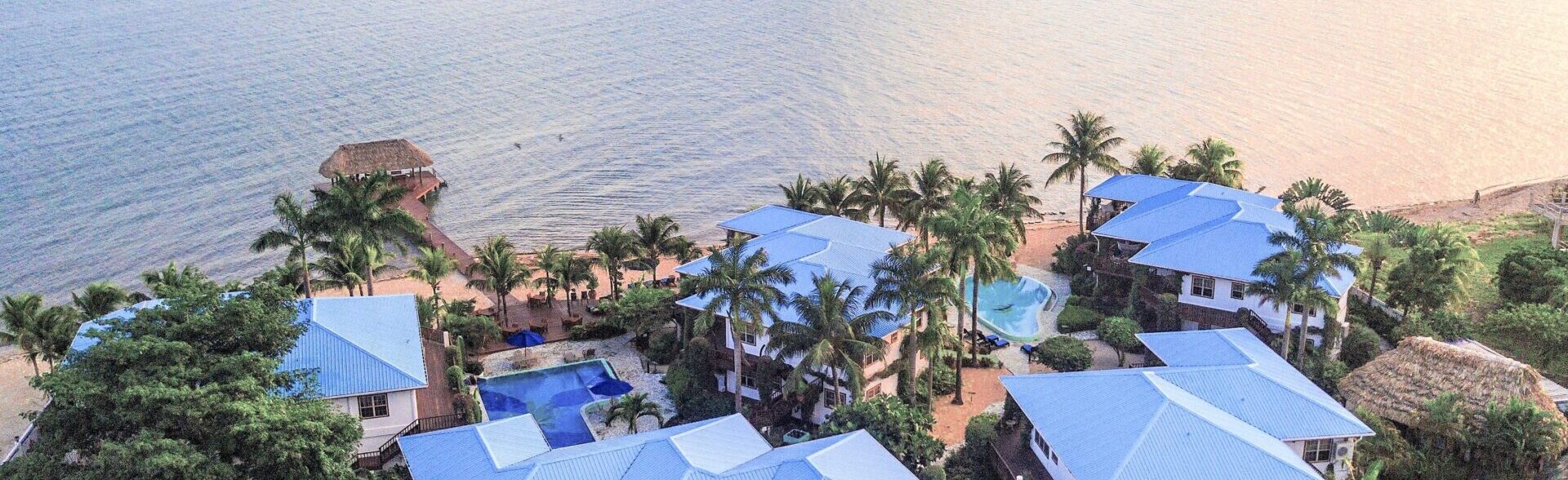
If you’re coming to Belize, one of the best places to stay is the award-winning Chabil Mar Resort located on the Placencia Peninsula. Chabil Mar is close to Garifuna centers such as Seine Bight, Hopkins, and Dangriga and regularly organizes trips to these locations for visitors who want to learn more about the fascinating Garifuna culture. Chabil Mar also organizes adventure tours to all of the top destinations in the country.

Richard Branson to Lead VIP Team to Explore Belize Blue Hole

A team of celebrities, including Sir Richard Branson, the iconic British CEO of the Virgin Group, will be converging on Belize this December to participate in a historic underwater research project.

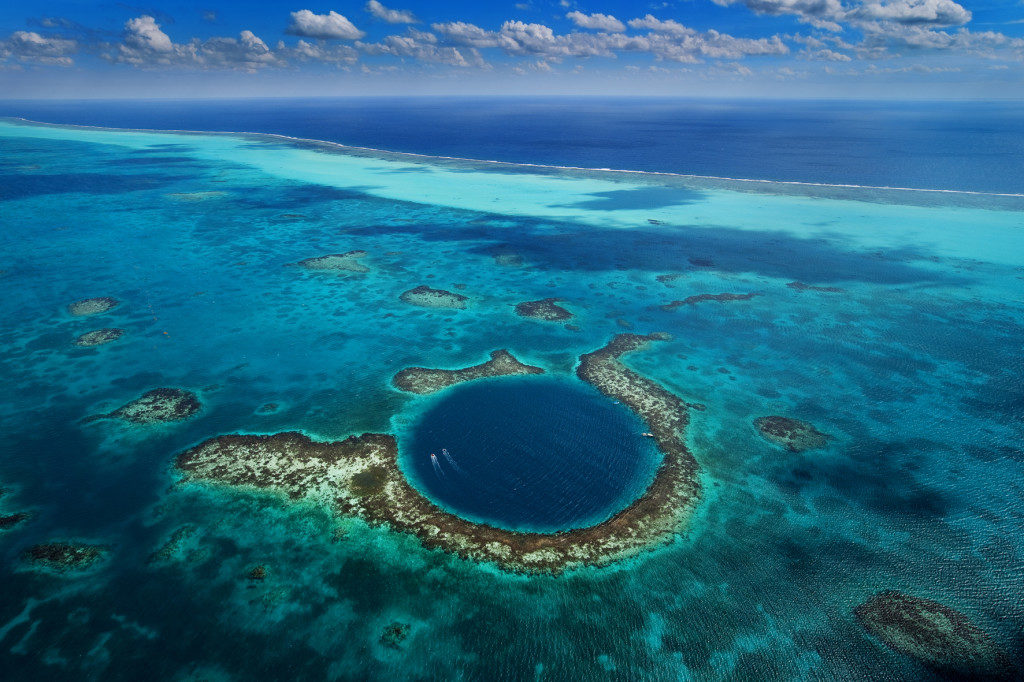
The Belize Blue Hole is the largest sinkhole in the world. Located a few miles off the coast, the Belize Hole Hole is large enough to comfortably contain two fully equipped Boeing 747 airliners with plenty of space left over. The Belize Blue Hole is easily visible from low earth orbit, a body of perfectly circular dark blue water neatly framed by Lighthouse Reef.

Today, the Belize Blue Hole is one of the most popular dive sites in the world due to what is underwater – a vast system of mysterious caverns. A million years ago, the caverns were on dry land where stalactites and stalagmites were formed. After the end of the last great Ice Age, water levels rose and covered the caverns to form the Belize Blue Hole (sometimes called the Great Blue Hole).

Despite its fame today, only local fishermen knew about the Belize Blue Hole 40 years ago when Jacques Cousteau, the legendary French explorer, visited the site in 1971 with his ship the Calypso. Afterwards, Cousteau declared that the site was one of his top 10 favorite dive sites on the planet. In 2018, his grandson Fabien Cousteau will be leading a team of scientists and explorers to once again map and explore the Belize Blue Hole. Along with scientists from the Roatan Institute of Deep Sea Exploration (RIDE), the team will use military-grade sonar and underwater cameras to create a 3D map of the entire site. Scientists will also be taking water and sediment samples to help better understand the natural history of Belize.

The 2018 expedition will be using next-generation submarines built by Aquatica, a Canadian company. The CEO of Aquatica Submarines has announced he will personally pilot one of the subs. And not to be outdone, his friend Sir Richard Branson has also declared he will pilot one of the submarines, too.

If you’re interested in diving the Belize Blue Hole yourself or want to explore the rest of the reef, one of the best places to stay is Chabil Mar. Located just steps from the beach on the beautiful Placencia Peninsula, Chabil Mar is an award-winning luxury resort that offers diving and snorkeling vacation packages ideal for adventure junkies.

Humans enjoyed chocolate 1,500 years earlier than thought: Study

Chocolate is humanity’s favorite food, and a new research paper published in the journal Nature Ecology and Evolution has proven that people have been making and enjoying chocolate for 1,500 years longer than previously thought. According to the study from researchers at the University of British Columbia in Canada, humans have been growing cacao (the principal ingredient in chocolate) for over 5,300 years.

The study looked at intentional cacao planting as opposed to cacao plants in the wild which thrive in the warm tropical climates of Central and northern South America. The researchers analyzed the DNA of modern cacao trees and discovered that new varieties started emerging over 5,000 years ago in indigenous settlements along the Amazon basin. The researchers were then able to prove that this farmed variety of cacao is the same as the cacao that was grown by the ancient Maya culture in Belize and southern Mexico.

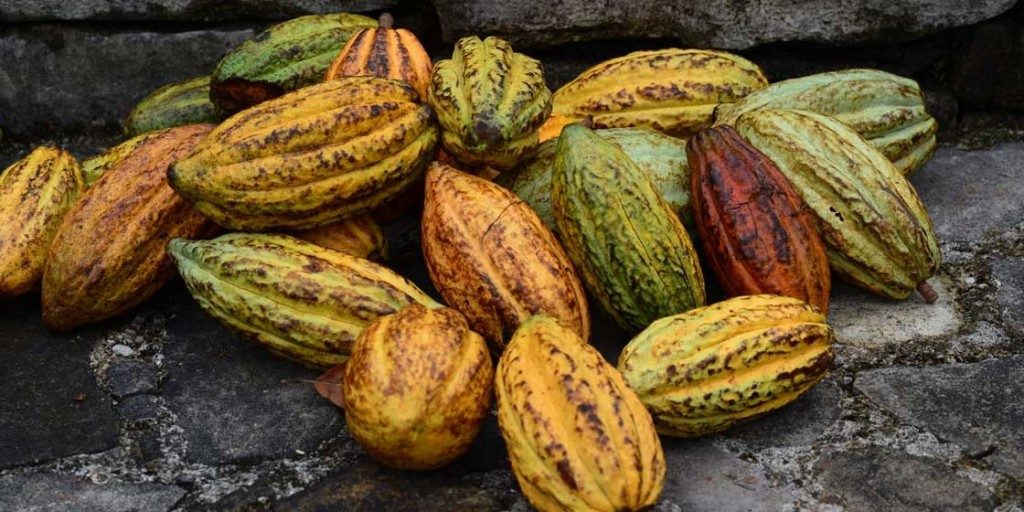
Prior to the arrival of the Spanish in the 15th century, the principle way that chocolate was consumed in the Americas was as a drink. The theobroma cacao species that is found across Belize and the rest of Central America was used to make sacred drinks which were consumed during religious ceremonies and feasts. Cacao beans were so highly prized by the ancient Maya that they were also used as currency.

By studying pottery and other artifacts at ancient sites that still contain remnants of cacao beans, researchers were able to push back the earliest verified data for intentional cacao farming to more than 5,300 years ago. Researchers discovered traces of theobromine, a component of modern cacao beans, inside the pottery fragments and were thus able to analyze the plant’s DNA, showing that it was the cultivated variety as opposed to the varieties found nearby in the wild.

The ancient Maya believed that chocolate was the “elixir of life,” and there are records of Maya kings drinking up to 50 cups of chocolate per day. Today, chocolate is known as a superfood, rich in antioxidants, copper, manganese, iron, and other essential nutrients.

Ready to try some ancient chocolate recipes for yourself? The best way to indulge your passion for this sublimely delicious superfood is to visit the Belize Chocolate Festival in May or sign up for one of Chabil Mar’s chocolate tours. Chabil Mar is an award-winning beach resort located just steps from the Caribbean on the beautiful Placencia Peninsula in southeastern Belize.

Three Belizeans Receive Artist Emeritus Award

In a VIP ceremony at the Museum of Belize in Belize City on October 19, 2018, three Belizean artists were given the award of “Artist Emeritus” of Belize and official recognition of their achievements by the government.

The ceremony was led by Patrick Faber, the Deputy Prime Minister of Belize, and Sapnah Budrani, president of the National Institute of Culture and History, who presented the Artist Emeritus award to Florencio Mes, Myrna Manzanares, and Gerald “Lord” Rhaburn in front of a packed crowd of cheering enthusiasts. Budhrani told a packed hall that “Belize is blessed with so much diversity, and these living heroes have made us laugh, dance, and appreciate our country’s rich artistic traditions.”

Florencio Mes is of Maya origin and is known for his sublime skills on the harp and his relaxing, soothing music. Hailing from San Pedro Colombia in Toledo District, Mes is the last surviving member of the “Three Kings,” three legendary Maya musicians from Central America.

Myrna Manzanares is an internationally recognized writer, poet, and storyteller who is known for her in-depth expressions of the Creole culture in Belize. Manzanares is a strong advocate of Creole culture, including traditional forms of music and dance.

Gerald Rhaburn, better known as Lord Rhaburn, is a well-known calypso, soca, reggae, and brukdown (breakdown) musician famous for songs such as “Pump it up” and “Gumagarugu Water” that stem from his deep Garifuna roots. He gained international recognition in the 1970s when performing with the Lord Rhaburn Combo. In 2004, the Lord Rhaburn Music Awards were first held, an annual award show that recognizes outstanding Belizean musicians.

All three Artist Emeritus award winners were given a plaque and a $500 monthly government stipend.

Speaking during the ceremony, Minister Faber said, “On behalf of the entire nation, we thank you for your lifetime of contributions to culture in Belize. We hope you will take your monthly stipend to continue to produce your art to further enrich generations of Belizeans to come.”

Also present at the ceremony were Dana Rhamdas of the National Creole Council, Hilario Mes, son of Florencio Mes, and Karen Vernon, the theater director at the Bliss Center for the Performing Arts. Attendees were also treated to a live phone call of congratulations from Dr. Linda Mcartha Sandy-Lewis, better known as the calypso musician “Calypso Rose.”

The staff and management of Chail Mar heartily congratulate these magnificent artists and thanks them for their contributions to Belizean culture.

Archives