10 Fascinating Facts About the Blue Hole in Belize

Easily recognizable from space, the Belize Blue Hole, sometimes known as the Great Blue Hole, is one of the most iconic dive spots in Belize.

Here are 10 fascinating facts about the Belize Blue Hole:

1 – Size and Dimensions

The Belize Blue Hole is almost perfectly circular in shape, measuring 300 meters (984 feet) across and 108 meters (354 feet) deep.

2 – The Largest Sea Hole in the World

The Belize Blue Hole is the largest sea hole in the world. Sea holes refer to caves that were submerged when rising waters covered them. Most sea holes, just like the Belize Blue Hole, were submerged at the end of the last great Ice Age some 10,000 years ago.

3 – Location

The Belize Blue Hole is located approximately 100 kilometers (62 miles) offshore of Belize City. The perimeter of the Blue Hole is Lighthouse Reef, a natural coral atoll.

4 – Stalactites and Stalagmites

Divers can explore thousands of stalactites and stalagmites that were formed when the Blue Hole was an aboveground series of caverns.

5 – Jacques Cousteau

Legendary French documentarian and marine biologist Jacques Cousteau visited the Blue Hole in 1971. He later described the Blue Hole as one of his top favorite 10 dive sites in the world.

6 – The Name

The name “Great Blue Hole” comes from British diver Ned Middleton who wrote a book about his career as a diver in 1988 named “Ten Years Underwater”. Although the Blue Hole was charted by the Spanish, no one is sure what name they gave for the region.

7 – Discovery Channel

In 2012, the Discovery Channel ranked the Belize Blue Hole as the #1 most amazing place on Earth.

8 – UNESCO World Heritage Site

The Belize Blue Hole is a UNESCO World Heritage Site, part of a vast barrier reef that is the second-largest barrier reef in the world after Australia’s Great Barrier Reef.

9 – Charles Darwin

In 1836, on his around the world voyage aboard the HMS Beagle, Charles Darwin visited the Belize Barrier Reef and declared it the “most remarkable coral reefs” in the entire Caribbean.

10 – Experienced Divers Only

Due to the challenges of diving the Belize Blue Hole, only divers who have completed at least 24 divers are allowed to explore the Belize Blue Hole.

About The Belize Blue Hole

 
Long a secret known only to Belizean fisherman, the Belize Blue Hole became famous in 1971 when legendary marine biologist and undersea explorer Jacques Cousteau visited the site.
 
Cousteau and his crew aboard the Calypso explored the depths of the Blue Hole, confirming that it had been created thousands of years ago when rising tides flooded a network of caves. Declared by Cousteau as one of the top 10 best diving spots on the planet, the Belize Blue Hole is located approximately 60 miles (100 km) from the coast of Belize.
 
A nearly perfectly circular body of water, the Belize Blue Hole is surrounded by the Lighthouse Reef Atoll. Divers can use the shallow waters of the atoll’s lagoon to begin their descent to the now-flooded cave that contains stalactites and stalagmites up to 40 feet (12 meters) in length.The coral atoll surrounding the Belize Blue Hole has an inner ring of shallow, lighter colored water that forms a natural ring around the deeper sapphire waters of the flooded cave.
 
Thousands of years ago when the cave flooded, the Belize Blue Hole was formed, a vertical entrance over 980 feet (300 meters) across with a bottom more than 400 feet (125 meters) below the sea’s surface today.As divers descend into the Great Blue Hole, the dark waters start to become more clear, allowing for an impressive view of the flooded cave network that is home to a variety of marine life, including a few elusive hammerhead sharks.

Due to the complexity and depth of the dive, only experienced divers are permitted to explore the majestic underwater formations that make the Belize Blue Hole such a unique dive site.

The Blue Hole is located along the Belize Barrier Reef, a UNESCO World Heritage Site part of the second-largest barrier reef system in the world.

An almost perfectly circular area of dark topaz water encircled by the Lighthouse Atoll on the Belize Barrier reef, the Great Blue Hole is one of the most intriguing and popular places to dive anywhere on Planet Earth.

Facts About The Belize Blue Hole

1.) The Blue Hole measures about 1,000 feet in circumference and is more than 400 feet deep. It is the largest natural formation of this type found anywhere in the world.

2.) The Blue Hole was formed at the end of the last Ice Age when rising seawaters flooded a series of enormous caverns. Geologists have determined that the caves first formed about 153,000 years ago and were completely submerged approximately 15,000 years ago.

3.) The Blue Hole is approximately 60 miles offshore from Belize City and is part of the Belize Barrier Reef, a UNESCO World Heritage Site.

4.) In 1971, famed French marine biologist Jacques Cousteau visited the Blue Hole with his boat Calypso, declaring it one of the top 10 diving spots on the planet.

5.) The underwater caves of the Blue Hole are filled with giant stalactites, proof that it once existed above water.

6.) The Blue Hole is home to several species of sharks, including bull sharks, Caribbean reef sharks, and the elusive hammerhead shark.

7.) In 2012, the Discovery Channel ranked the Blue Hole as #1 on its list of 10 Most Amazing Places on Earth.

8.) The Blue Hole is visible from space, easily identifiable by its unique circular formation and location within the midst of the greater Belize Barrier Reef.

9.) The name “Blue Hole” was coined by the British diver Ned Middleton in his book “10 Years Underwater” published in 1988.

10.) Due to the complexity of diving required, the Blue Hole is restricted to experienced divers only with a minimum of 24 completed dives.

What It’s Really Like To Dive The Great Blue Hole

The Mysterious Belize Great Blue Hole is a large underwater hole off the coast of Belize. It lies near the center of Lighthouse Reef, a small atoll 100 kilometers (62 mi) from the mainland and Belize City. The hole is perfectly circular in shape, over 300 meters (1000 ft) across, 3140 feet circumference and 125 meters (410 ft) deep.

Read also: Dive the Great Blue Hole of Belize with this Vacation Package

It was formed as a limestone cave system during the last glacial period when the sea level was 400 to 500 feet below present time and was dry land. Last glacial period began about 120,000 years ago and end about 15,000 years ago. Reaching the maximum extension 26,500 years ago. At the end the ocean began to rise, the caves flooded, and the roof collapsed.

Believed to be the world’s largest feature of its kind, the Great Blue Hole is part of the larger Belize Barrier Reef Reserve System, a World Heritage site of the United Nations Educational, Scientific and Cultural Organization (UNESCO).

The hole itself is the opening to a system of caves and passageway that penetrate this undersea mountain. In various places, massive limestone stalactites hang down from what was once the ceiling of air-filled caves thousand of years before the end of the last Ice Age 15,000 years ago. When the ice melted the sea level rose, flooding the caves. This process occurred in stages. Evidence for this are the shelves and ledges, carved into the limestone by the sea, which run the complete interior circumference of the Blue Hole at various depths.

great_blue hole of belize

The Blue Hole is a “karst- eroded sinkhole.” It was once a cave at the center of an underground tunnel complex whose ceiling collapsed. Some of the tunnels are thought to be linked right through to the mainland, though this has never been conclusively proved. Notable are the large population of sharks such as lemon, black tip, reef, hammerhead, and bull sharks.
Mysterious and legends always have been around the Belize Blue Hole.

Read also: Scuba Dive the Great Belize Barrier Reef with this Vacation Package

This was the entrance to Xibalba?. It’s the kind of underwater geology that inspires speculation about aliens creating geometrically perfect anomalies, mermaids and monsters living in darkness.

I explored the bottom of the Blue Hole perimeter (3,140 feet circumference). To do this I dove down twice, reaching the depth of 375′ feet which took 4 to 5 hours of diving each day.
Video Music:
Start to 2:18 min. “Dawn From Four Sea Interludes” by Benjamin Britten
2:18 to 4:37 min. “300 Violin Orchestra” by Jorge Quintero
4:37 to End “Groove Armada” from Tomb Raider Soundtrack

Video and Blog courtesy of Ramon Llaneza

If you would like to explore the wonders of the Belize Blue Hole, the resort of Chabil Mar has a comprehensive scuba diving vacation package that includes a guided trip to the Blue Hole.

Visit our website Chabilmarvillas.com for more information on Belize and Chabil Mar, and don’t hesitate to send us an email, or call & chat with us via WhatsApp Free Worldwide: +501-633-7547, Local: (011-501) 523-3606, if you have questions or need help in planning a Belize vacation.
 

Save

Save

Where Is Belize?

Belize is located in Central America between Mexico’s Yucatan Peninsula and Guatemala. Belize is the only English-speaking country in the region and has a long coastline on the Caribbean Sea.

Although relatively small, Belize has an incredibly diverse landscape, including misty mountains, enormous waterfalls, pristine rivers, savannah, jungles teeming with wildlife, massive cave systems, and hundreds of offshore islands along the Belize Barrier Reef, the second-largest barrier reef in the world.

Misconceptions About Belize

Is Belize an island?

No. Belize is on the mainland of Central America, although it does have hundreds of offshore islands.

Is Belize located in the Caribbean?

Belize has a Caribbean culture as well as a lengthy coastline along the Caribbean, but Belize is not technically “in” the Caribbean as it is located on the mainland of Central America.

Is Belize located in South America?

No. Belize is in Central America. For purists that only consider South and North America to be true continents, Belize would be located in North America.

Is Belize in Honduras?

No. Belize was called British Honduras back during the colonial days, but it got this name because the southern part of the country opens onto the Bay of Honduras. Today, Belize and Honduras are two separate nations separated by a narrow band of land belonging to Guatemala. It takes about two hours with a boat to travel from Punta Gorda in the south of Belize to Puerto Cortez in Honduras.

What’s the Right Way to Spell Belize?

Over the centuries, Belize has been spelled lots of different ways, including Belieze, Belise, Balize, and Beleez. The official name of the country in English is Belize, which you better “Belize” matters to the people who live there!

Facts About Belize

  • The official location of Belize is 17 degrees 15 minutes north and 88 degrees 45 west.
  • Belize has approximately 360,000 people.
  • English is the official language of Belize but other languages spoken in the country include Spanish, Mennonite German, Maya, and Garifuna.
  • Belize is about two hours flying time from Miami or Dallas/Houston.
  • Belize has 240 miles (386 km) of Caribbean coastline and hundreds of offshore islands.
  • Belize has a landmass of around 8,860 square miles (22,960 square km), just a bit bigger than the state of Massachusetts.
  • The highest point of land in Belize is Doyle’s Delight at 3,688 feet (1,124 meters).
  • Islands in Belize are known as “cayes” (pronounced “keys”).

Belize Maps

Map of Placencia Belize

Map of Placencia and Chabil Mar

Only about 2,000 year-round residents live in the village located on the southern tip of the Placencia Peninsula. The village is a fifteen-minute stroll along the beach or 5-minutes by bike, kayak or paddle board from Chabil Mar. (Click on the Map for Larger Image and to Zoom)

Belize Map in relation to Central America

Central America with Belize

Belize shares its northern border with Mexico and is bounded on the west and south by the nation of Guatemala.  (Click on the Map for Larger Image and to Zoom)

Placencia Reef and Dive Locations Map

placencia-dive-locations

Many of the best diving spots along the reef are just minutes from Chabil Mar. This map shows these, including Laughing Bird Caye and Gladden Spit. (Click on the Map for Larger Image and to Zoom)

Belize Diving Map

Belize Dive Map

Diving locations in and around the Belize Barrier Reef are numerous, and this map shows the best spots. (Click on the Map for Larger Image and to Zoom)

Belize Atolls Map

belize atolls map

Often described as a “coral atoll”, an atoll is a ring of coral that has a lagoon in its center. The circumference of the atoll is dry land, and Belize has hundreds of these atolls in the Caribbean up and down the Belize Barrier Reef. (Click on the Map for Larger Image and to Zoom)

Belize Geography Map

belize geographical map

Belize has a varied geography, with rolling hills and higher elevations in the southwest and west to lush agricultural flat lands in the north and southeast. Rainforest and jungle occupy much of Belize, and the country has a long coastline on the Caribbean with hundreds of offshore islands. (Click on the Map for Larger Image and to Zoom)

Map of Placencia, Belize

placencia-village-map

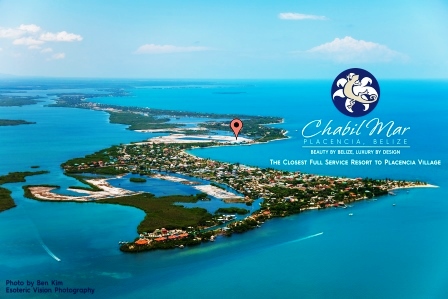
This 16-mile long finger of land is located on the coast of southeastern Belize in Stann Creek District. Chabil Mar is located just north of the village on the eastern side of the peninsula. (Click on the Map for Larger Image and to Zoom)

For more information about Belize, feel free to chat with our Concierge at: concierge@chabilmarvillas.com or contact our Reservations Manager at: reservations@chabilmarvillas.com. Or perhaps you would like to call toll free from the US or Canada: 1-866-417-2377.

Save

Save

Save

Save

Actun Tunichil Muknal Mayan Cave (ATM Cave)

Entrance to the ATM Cave

While no one knows the original name of the cave, today it is called Actun Tunichil Muknal (ATM) Cave from a Maya term meaning “Cave of the Stone Sepulcher”. Sometimes referred to as the Cave of the Stone Altar, ATM is a complex underground network of tunnels that lead to one of the most important historic sites ever discovered. Containing over 1,400 artifacts from the end of the Ancient Maya Empire that have lain undisturbed for more than a millennium, the ATM cave was once used by priests to conduct human sacrifices at a time of drought, warfare, and civil strife.

The entrance to ATM Cave is protected by a deep pool of cool water that visitors must traverse by swimming. Once inside, the cave opens up to a series of enormous stalactites and stalagmites. The first indication of the cave’s religious importance is a large stone altar carved from a stalactite with a stingray spine as its centerpiece, the altar or sepulcher that gave the cave system its current name. All around the altar lie potsherds, bone fragments, relics and other artifacts left behind by the Maya priests more than a thousand years ago.

Further in, towards what the Ancient Maya believed was the sacred nexus where the underworld of the gods connected to the world of men, lie the bones of the Crystal Maiden. This sacrificial victim, estimated to be a young adult in their 20s, has, over time, bonded with the minerals in the cave to acquire a glittery sheen. Nearby lie the remains of seven adult sacrificial victims as well as those of five children all under the age of 5. Thousands of fragmented pots and vessels are scattered near the bones, including some largely-intact pots and bowls that archeologists believe once held food offerings to appease the gods. Other artifacts include the obsidian blades that are believed to have been used in the solemn but gruesome human sacrifices conducted by Maya priests.

Archeologists have estimated that the ATM cave first became a site used by the Maya for religious purposes nearly 2,000 years ago. The most recent remains are dated to the Terminal-Classic Period (roughly 800 to 1000 AD), a time when the Maya heartland was suffering from severe drought and civil wars. Forgotten for more than a thousand years, the ATM cave was rediscovered in 1989 by local archeologists.

Due to the fragile nature of the artifacts within, only guides authorized by the Department of Archeology can access the ATM Cave. At Chabil Mar, we offer guests guided tours of this unique historical site in Belize. Our concierge would be very pleased to make those arrangements for a visit there for you.

Discover Why January Is Ideal for a Belize Holiday Vacation

January is one of the most popular months to visit Belize, and for good reason. As winter settles in across much of North America and Europe, Belize offers warm sunshine, clear skies, and comfortable temperatures that make outdoor adventures and beach days especially enjoyable. If you are planning a holiday vacation to Placencia Belize in January 2026, understanding the weather helps you prepare for a relaxed and memorable escape.

Warm Days and Comfortable Temperatures

Belize holiday weather

January weather in Belize is warm without being overwhelming. Daytime temperatures typically range from the mid seventies to low eighties Fahrenheit, creating ideal conditions for swimming, snorkeling, and exploring. Evenings cool slightly, offering a refreshing contrast that is perfect for beachfront dining or a peaceful walk along the shore.

In Placencia, the coastal breeze adds to the comfort, keeping days pleasant and nights inviting. This balance makes January one of the best times of year for travelers who want to enjoy both relaxation and adventure without intense heat.

Low Rainfall and Clear Skies

Placencia travel guide

January falls within Belize’s dry season, which means rainfall is minimal compared to other times of the year. Visitors can expect mostly sunny days with occasional light showers that pass quickly and leave the air feeling fresh. These brief rain showers rarely interrupt plans and often enhance the beauty of the landscape.

Clear skies and calm weather make January especially appealing for travelers who want reliable conditions for excursions. Whether snorkeling along the Belize Barrier Reef or visiting jungle waterfalls, the weather supports a wide range of outdoor activities.

Perfect Conditions for Water Activities

Placencia Belize weather

One of the highlights of visiting Belize in January is the exceptional water conditions. The Caribbean Sea is calm and warm, offering excellent visibility for snorkeling and diving. Placencia is ideally located for easy access to Silk Cayes and Laughing Bird Caye National Park, where guests can explore colorful coral reefs, tropical fish, and sea turtles.

Kayaking, paddleboarding, and sailing are also popular during January, thanks to gentle winds and smooth waters. These conditions make it easy for beginners and experienced water lovers alike to enjoy time on the sea.

Ideal Weather for Jungle and Cultural Adventures

ancient Maya ruins Belize


January’s mild temperatures are equally suited for inland adventures. Hiking to Maya ruins, exploring rainforest trails, and visiting wildlife sanctuaries are all more comfortable during this time of year. The lush greenery remains vibrant from the recent rainy season, offering stunning scenery for photography and exploration.

Placencia also enjoys a lively atmosphere in January, with cultural events, local music, and village life adding depth to the travel experience. Visitors can explore Placencia Village during the day and enjoy evenings filled with fresh seafood, music, and warm Caribbean breezes.

What to Pack for January Weather in Belize

January travel Belize

Packing for a January holiday in Belize is simple. Lightweight clothing made from breathable fabrics is ideal for daytime comfort. Swimsuits, sandals, and sun protection are essential, along with a light sweater or wrap for cooler evenings or boat rides.

Comfortable walking shoes are recommended for village strolls and excursions, while water shoes are useful for snorkeling trips. A light rain jacket can be helpful, though it is rarely needed for long periods.

Enjoy January at Chabil Mar Villas

Belize travel planning

At Chabil Mar Villas, January weather allows guests to fully enjoy the resort’s beachfront setting. Morning coffee on the veranda, afternoons by the infinity pool, and sunset dinners by the sea feel effortless when the climate is this inviting.

January 2026 offers the perfect combination of sunshine, comfort, and adventure in Belize. For travelers seeking a winter escape filled with warmth and beauty, Placencia is an ideal choice.

Plan your January 2026 holiday vacation at Chabil Mar Villas and experience Belize at its best, with perfect weather and unforgettable moments by the sea.

Visit our website Chabilmarvillas.com for more information on Belize and Chabil Mar, and don’t hesitate to send us an email, or call & chat with us via WhatsApp Free Worldwide: +501-633-7547, Local: (011-501) 523-3606, if you have questions or need help in planning a Belize vacation.

Planning the Perfect Placencia Belize Vacation

Planning a vacation should be exciting, not overwhelming. Yet many travelers find themselves spending weeks researching flights, accommodations, activities, and transportation before they even leave home. The good news is that a trip to Placencia Belize can be remarkably easy to plan when you focus on the essentials.

With its beautiful beaches, friendly atmosphere, and convenient access to Belize’s top attractions, Placencia offers a destination where relaxation begins long before you arrive. Whether you are traveling as a couple, family, or group of friends, a little preparation can help ensure a smooth and enjoyable experience from start to finish.

For guests staying at Chabil Mar, stress free travel becomes even easier thanks to personalized service and expert local knowledge.

Plan Your Flights and Accommodations Early

 Placencia travel guide


One of the simplest ways to reduce travel stress is to book accommodations and flights well in advance. Belize is easily accessible from many major cities in North America, with international flights arriving at Philip S. W. Goldson International Airport near Belize City.

From there, travelers can take a short domestic flight directly to Placencia, allowing them to reach the peninsula quickly and comfortably. Reserving flights early often provides more schedule options and better pricing.

Choosing the right accommodation is equally important. Staying at a beachfront resort that offers concierge services can eliminate much of the planning work once you arrive. Instead of coordinating activities on your own, you can rely on local experts who know the destination well.

Keep Your Itinerary Simple and Flexible

Belize beach vacation

One of the biggest mistakes travelers make is trying to do too much in too little time. Placencia is best enjoyed at a relaxed pace, allowing time for both adventure and downtime.

Choose a few key experiences rather than filling every hour of your vacation. A snorkeling trip to the Belize Barrier Reef, a visit to Placencia Village, and a jungle excursion are often enough to create a memorable trip without feeling rushed.

Leave room for spontaneity. You may discover a favorite beach, a local restaurant, or an unexpected activity that becomes one of the highlights of your vacation. Some of the best travel memories happen when there is space to simply enjoy the moment.

Travelers visiting during summer may also want to include local events such as Placencia Lobsterfest, taking place July 4 through July 6, 2026, which offers a fun and authentic way to experience Belizean culture.

Let Chabil Mar Handle the Details

Belize beach vacation


One of the easiest ways to enjoy a stress free vacation is to stay somewhere that helps coordinate the experience for you. Chabil Mar excels in this area, providing personalized assistance before and throughout your stay.

As the only guest exclusive resort on the Placencia Peninsula, Chabil Mar offers a peaceful environment where guests can focus on relaxation rather than logistics. The resort’s concierge team can arrange transportation, reef excursions, fishing trips, jungle adventures, dining recommendations, and more.

Spacious villas, beachfront access, and attentive service create a seamless vacation experience from arrival to departure. Instead of worrying about schedules and reservations, guests can simply enjoy Belize at their own pace.

The beauty of Placencia lies in its simplicity. The destination encourages travelers to slow down, enjoy the surroundings, and embrace the relaxed rhythm of Caribbean life.

Plan your stress free getaway to Placencia Belize and let Chabil Mar Villas take care of the details while you focus on making unforgettable memories.

Visit our website Chabilmarvillas.com for more information on Belize and Chabil Mar, and don’t hesitate to send us an email, or call & chat with us via WhatsApp Free Worldwide: +501-633-7547, Local: (011-501) 523-3606, if you have questions or need help in planning a Belize vacation.

Archives